Wedding shoes are more than a finishing touch to a bridal look. For bridal brands and footwear companies, developing a successful wedding shoe collection requires the right balance of design, materials, fit, comfort, size range and manufacturing quality.
From classic satin pumps and elegant leather slingbacks to crystal sandals and comfortable bridal flats, there are many possibilities when developing custom wedding shoes.
At the same time, today’s footwear market is becoming more inclusive. In addition to regular sizes, brands are increasingly considering wide width wedding shoes, plus size wedding shoes and extended size ranges so that their collections can serve more customers.
For shoe brands, this creates an opportunity to build bridal collections that combine beautiful materials and fashion details with better fitting options.
In this guide, we look at the most popular materials for custom wedding shoes, bridal shoe styles and decorations, as well as important considerations when manufacturing regular, wide width and plus size wedding shoes.
What Should Brands Consider When Developing Custom Wedding Shoes?
Wedding footwear needs to look elegant, but appearance is only part of the product.
A bride may wear the same pair of shoes during the ceremony, photography, dinner, reception and dancing. This means comfort and fit can be just as important as the visual design.
When developing custom wedding shoes, footwear brands should consider:
-
Upper materials
-
Shoe last and fitting
-
Toe shape and toe-box space
-
Heel height and stability
-
Insole cushioning
-
Lining materials
-
Strap positioning
-
Outsole construction
-
Regular and extended size ranges
-
Width options
-
Bridal decorations and accessories
These factors should ideally be considered during the initial shoe development process rather than after the sample has already been completed.
For wide width wedding shoes and plus size wedding shoes, last development and fitting become particularly important because simply enlarging a standard shoe is not always enough to achieve a good fit.
Popular Materials for Custom Wedding Shoes
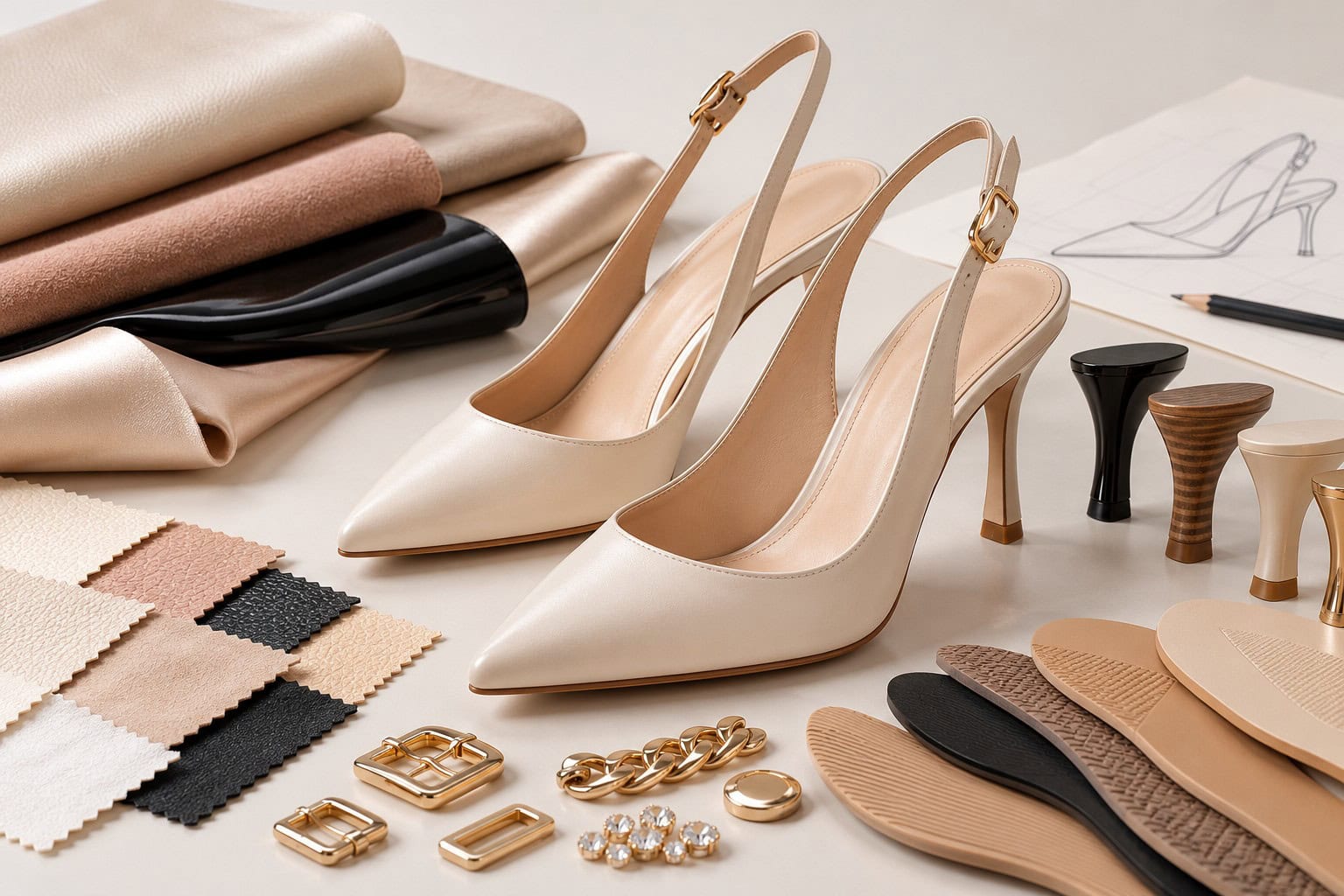
Bridal footwear continues to range from classic pumps and slingbacks to flats and statement heels, reflecting the wider variety of styles seen in contemporary bridal fashion.
Material is one of the first decisions a bridal footwear brand needs to make.
The material affects not only the appearance of the shoe but also its softness, structure, comfort, durability and cost.
Here are some of the most popular materials used in custom wedding shoe manufacturing.
1. Satin Wedding Shoes

Satin is probably one of the materials most strongly associated with traditional bridal footwear.
Its smooth surface and elegant sheen work particularly well with classic wedding colors such as:
-
White
-
Ivory
-
Cream
-
Champagne
-
Blush
Satin can be used across many different bridal shoe constructions, including pumps, slingbacks, kitten heels, Mary Janes, ballet flats and block heels.
It also provides an excellent background for decorative elements such as pearls, crystals, rhinestones, bows and fabric flowers.
For brands developing custom wedding shoes, however, choosing satin should involve more than selecting a color.
Different satin materials can vary in thickness, shine, softness and backing. The material needs to work with the intended shoe structure and manufacturing process.
A very thin satin, for example, may require appropriate backing or reinforcement to maintain the desired shape of the upper.
Why Brands Choose Satin for Wedding Shoes
Satin offers a recognizable bridal appearance without requiring an overly complicated shoe design.
A simple pointed-toe pump covered in high-quality ivory satin can already look elegant. Adding a crystal buckle, bow or pearl decoration can create an entirely different product while maintaining the same basic silhouette.
This versatility makes satin particularly useful for bridal footwear collections.
2. Genuine Leather Wedding Shoes

For brands targeting a premium market, genuine leather wedding shoes can be an excellent option.
Depending on the design, different types of leather can be considered, including soft sheep leather and cow leather.
Leather offers several advantages:
-
Premium appearance
-
Soft hand feel
-
Flexibility
-
Durability
-
Comfortable fitting potential
-
Natural texture
Soft leather can be particularly useful for comfort-focused bridal footwear.
It can also be a good option when developing wide width wedding shoes, where the softness and flexibility of the upper material may help create a more comfortable forefoot fit when combined with the correct last and pattern.
Leather wedding shoes do not necessarily have to be white. Ivory, cream, nude, champagne, silver and soft gold can all work well for bridal collections.
Leather can be used for pumps, slingbacks, flats, sandals, block heels and minimalist bridal shoes.
For premium collections, brands may also consider genuine leather lining and insoles.
For brands that prioritize responsible leather sourcing, organizations such as the Leather Working Group (LWG) provide standards and certification frameworks for leather manufacturers.
3. PU and Synthetic Leather Wedding Shoes
Genuine leather is not required for every bridal collection.
Good-quality PU and other synthetic materials can offer attractive alternatives, particularly when the brand needs to control its target price.
Synthetic materials are available in many finishes, including:
-
Smooth matte surfaces
-
Soft leather-like textures
-
Patent finishes
-
Metallic surfaces
-
Pearl finishes
-
Embossed textures
This makes PU useful for commercial custom wedding shoe collections that require more flexibility in color and price.
PU can be used for bridal pumps, sandals, slingbacks, flats and fashion-focused wedding heels.
However, material quality still matters. During sample development, the factory should evaluate the softness, flexibility, folding behavior and surface stability of the selected material.
4. Lace Wedding Shoes

Lace is another material closely associated with bridal fashion.
It can create a romantic, delicate or vintage-inspired appearance depending on the pattern.
Instead of using lace alone, it is often combined with a supporting material such as satin, mesh or another fabric. This allows the shoe to maintain its structure while preserving the visual effect of the lace.
Lace works especially well for:
-
Bridal pumps
-
Mary Jane wedding shoes
-
Ballet flats
-
Slingbacks
-
Closed-toe heels
-
Vintage-inspired bridal shoes
Floral lace can create a traditional romantic look, while more geometric lace patterns can give the shoe a contemporary appearance.
Brands can also combine lace with pearls, crystals or embroidery for a more decorative bridal style.
5. Mesh and Tulle Wedding Shoes
Mesh and tulle are excellent choices for brands looking for a lighter and more modern bridal aesthetic.
Transparent or semi-transparent sections can make a shoe appear delicate without adding too many decorative elements.
Mesh is especially effective when combined with:
-
Satin
-
Leather
-
Crystals
-
Pearls
-
Rhinestones
-
Embroidery
For example, a pointed bridal pump can use transparent mesh side panels with satin around the toe and heel.
Mesh can also work well for crystal-covered wedding shoes because the transparent base allows the embellishment to become the main visual feature.
From a manufacturing perspective, however, reinforcement is important. Areas around seams, straps and edges need to maintain enough strength while preserving the delicate appearance.
6. Velvet Wedding Shoes
Velvet offers a richer, softer and more distinctive appearance than traditional satin.
Although it may not be the first material people associate with wedding shoes, it works particularly well for:
-
Autumn weddings
-
Winter weddings
-
Evening weddings
-
Vintage-inspired bridal collections
-
Luxury bridal footwear
Ivory and champagne velvet can maintain a traditional bridal look, while burgundy, navy or other deeper shades can create statement wedding shoes.
Velvet is particularly attractive on Mary Jane shoes, pumps, block heels and bridal flats.
When selecting velvet, brands should consider the density, direction and surface finish of the material because these characteristics can affect the final appearance of the shoe.
7. Metallic and Glitter Wedding Shoe Materials
Modern bridal collections are no longer limited to white and ivory.
Silver, champagne, soft gold and other metallic shades can complement bridal dresses while making the shoes easier to wear again after the wedding.
Brands may consider:
-
Metallic leather
-
Metallic PU
-
Glitter fabric
-
Pearl-finish materials
-
Special coated fabrics
These materials are particularly suitable for bridal sandals, evening shoes and statement heels.
Because metallic and coated materials can react differently during folding and lasting, testing them during sample development is important.
Wedding Shoe Material Comparison
| Material | Main Appearance | Comfort Potential | Suitable Wedding Shoe Styles | Market Position |
|---|---|---|---|---|
| Satin | Elegant, smooth and classic | Good with correct construction | Pumps, slingbacks, kitten heels, flats | Classic bridal |
| Genuine Leather | Premium and sophisticated | Very good with soft leather | Pumps, sandals, flats, slingbacks | Premium / luxury |
| PU / Synthetic | Versatile and commercial | Depends on quality | Heels, sandals, pumps, flats | Cost-effective |
| Lace | Romantic and delicate | Usually combined with backing | Pumps, Mary Janes, flats | Romantic / traditional |
| Mesh / Tulle | Light and transparent | Lightweight | Pumps, sandals, embellished shoes | Modern bridal |
| Velvet | Rich and soft | Good | Pumps, Mary Janes, block heels | Vintage / luxury |
| Metallic / Glitter | Fashionable and decorative | Depends on base material | Sandals, pumps, evening heels | Fashion bridal |
Popular Decorations for Custom Wedding Shoes

After choosing the upper material, decorative elements can give custom wedding shoes their final bridal identity.
Pearls
Pearls are one of the most recognizable bridal decorations. They can be applied individually, arranged across straps or used as part of decorative buckles.
Crystals and Rhinestones
Crystals and rhinestones work particularly well on satin and mesh.
They can be used as subtle accents or become the main feature of a statement wedding shoe.
Bows
Bows can completely change the character of a bridal shoe.
A small satin bow can create a classic look, while a large structured bow can turn a simple pump or slingback into a fashion statement.
Fabric Flowers
Fabric flowers are suitable for romantic and feminine bridal collections. They can be made in different sizes and materials according to the design.
Decorative Buckles
Crystal buckles, pearl buckles and metal accessories are frequently used on pumps, Mary Janes and slingbacks.
For private-label footwear projects, custom logo hardware can also be developed when required.
Embroidery
Embroidery can be applied to mesh, satin and other fabrics to create delicate bridal patterns.
Chains and Jewelry-Inspired Details
For more fashion-forward bridal collections, decorative chains, metal ornaments and jewelry-inspired accessories can create a stronger statement.
Popular Custom Wedding Shoe Styles
The same bridal materials can be used across many different shoe constructions.
A strong bridal footwear collection may combine several heel heights and silhouettes so customers can choose according to style and comfort preferences.
Classic Wedding Pumps
Pumps remain one of the most recognizable wedding shoe styles.
They can be developed with pointed, almond or softer toe shapes and produced in satin, leather, lace, PU or embellished materials.
A simple satin pump can create a timeless bridal look, while crystals, bows or decorative buckles can make the same basic silhouette more distinctive.
Kitten Heel Wedding Shoes
Kitten heels are an attractive option for brides who want an elegant heel without excessive height.
They work particularly well with pointed toes and slingback constructions.
Satin, leather and decorative mesh can all be used to create modern kitten heel bridal shoes.
Block Heel Wedding Shoes
Block heels offer a different balance between fashion and stability.
They can work well for outdoor weddings and for customers who prefer a more stable heel base.
Block heels can also be considered when developing certain wide width wedding shoe collections where comfort and stability are important product objectives.
Bridal Slingbacks
Slingbacks create a lighter appearance than fully closed pumps.
They can be developed with kitten heels, block heels or higher heels and work well with satin, leather and mesh constructions.
Bridal Ballet Flats
Not every bride wants to wear heels.
Bridal ballet flats can be developed as the primary wedding shoe or as a second pair for the reception.
Satin, soft leather, lace, mesh and crystal decorations can transform a simple flat into an elegant bridal product.
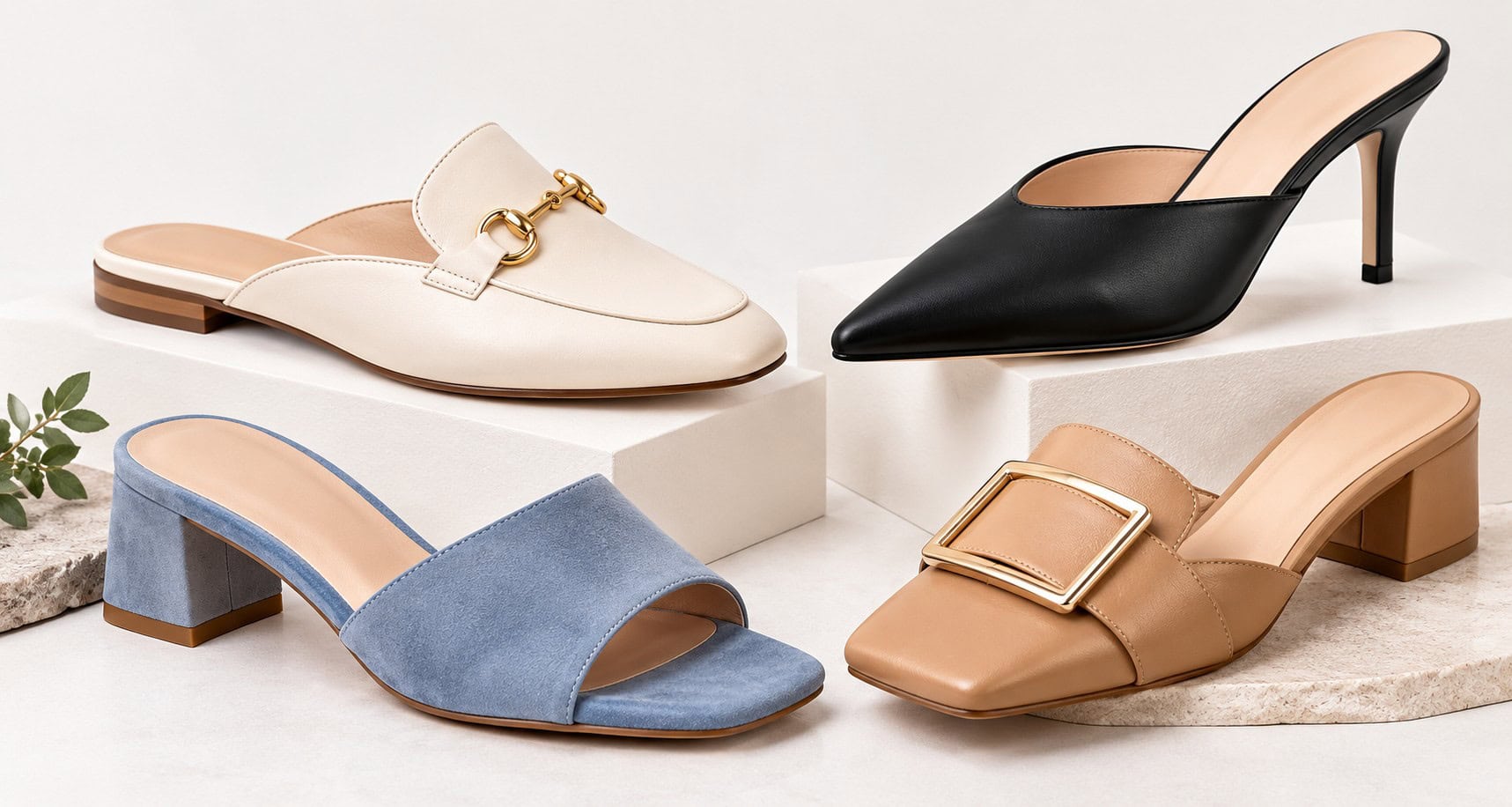
Mary Jane Wedding Shoes
Mary Jane silhouettes are particularly suitable for satin and velvet.
The strap also provides an opportunity to add pearls, crystals or decorative buckles.
Depending on the toe shape and heel, a Mary Jane wedding shoe can look vintage, romantic or contemporary.
Strappy Bridal Sandals
Strappy sandals are particularly suitable for summer and destination weddings.
They can be produced in leather, PU, satin and metallic materials, with crystal or pearl details added to the straps.
Wide Width Wedding Shoes: More Than Making the Shoe Wider

Developing wide width wedding shoes requires more than simply increasing the width of an existing upper pattern.
The shoe last is one of the most important elements.
A wide width last may require adjustments to:
-
Forefoot width
-
Toe-box volume
-
Instep fitting
-
Heel fitting
-
Ball girth
-
Overall shoe proportions
The upper pattern also needs to work correctly with the wider last.
For sandals, strap lengths and positioning may need to be adjusted. For pumps, the forefoot may require additional room without allowing the heel to become too loose.
This is why proper wide width wedding shoe manufacturing should begin during the last and sample development stage.
The goal is not to make the shoe look unnecessarily wide. The goal is to provide additional fitting space while maintaining an elegant silhouette.
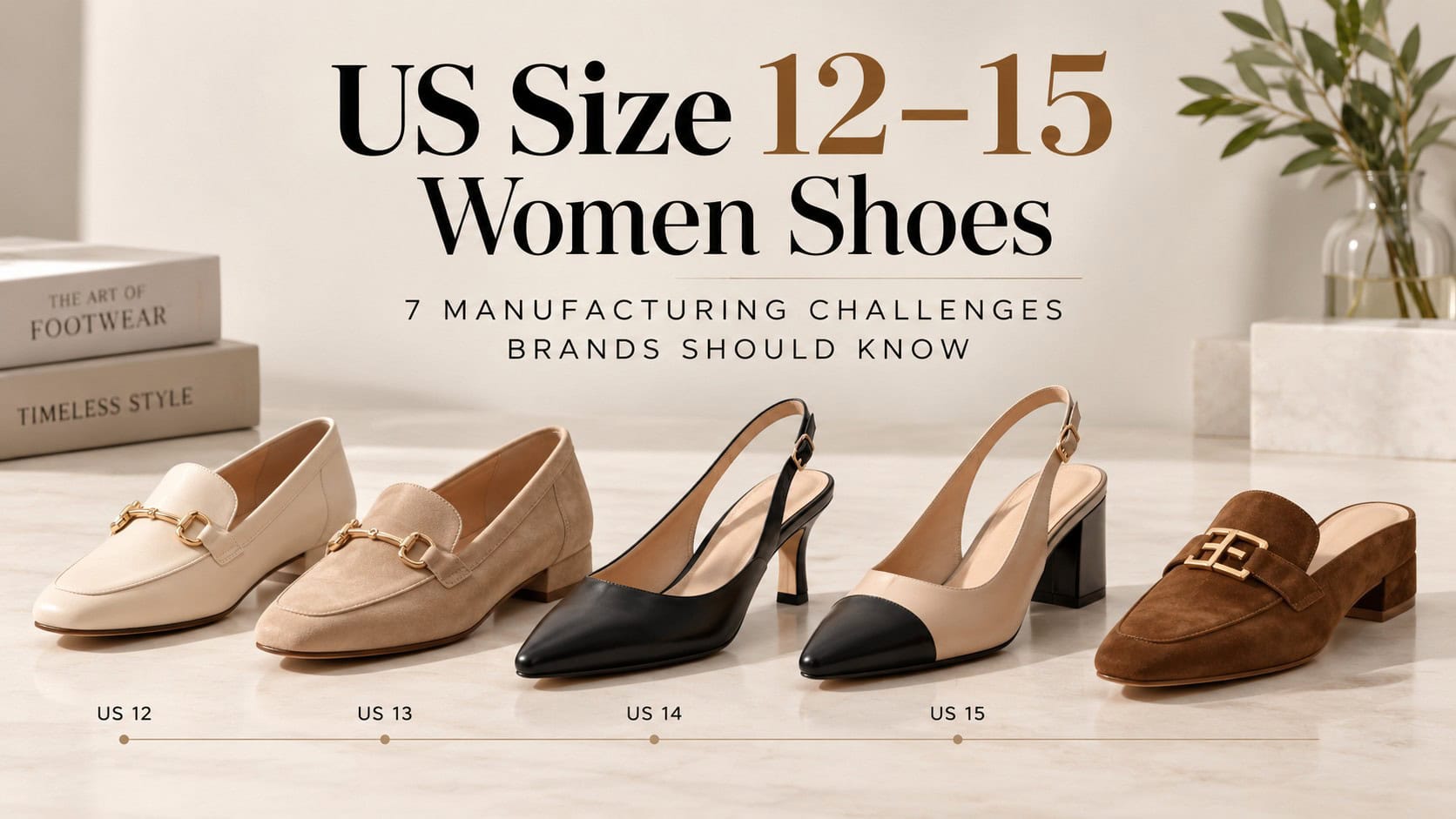
Plus Size Wedding Shoes and Extended Sizes
Size inclusivity also involves extending the length range of a collection.
For plus size wedding shoes and extended sizes, simply scaling a smaller shoe proportionally may not always produce the best result.
As the shoe size increases, several components may need to be evaluated:
-
Last dimensions
-
Outsole proportions
-
Heel size and stability
-
Upper patterns
-
Strap lengths
-
Insole dimensions
-
Decorative proportions
-
Overall visual balance
For example, a bow or buckle that looks balanced on a smaller sample size may appear too small on a much larger size.
The design should therefore be reviewed across the intended size range.
This is particularly important for bridal brands planning collections that extend significantly beyond standard women shoe sizes.
Regular Sizes, Plus Sizes and Wide Widths Can Be Developed Together
Offering inclusive sizing does not mean a brand needs to focus exclusively on plus size or wide width footwear.
A bridal collection can be developed across:
Regular Sizes + Extended / Plus Sizes + Wide Width Options
This approach allows brands to maintain the same design identity while serving a broader customer base.
However, the required lasts, outsoles, heels and components should be discussed with the manufacturer early in the development process.
Some existing outsole and heel molds may only cover a certain size range. If a brand wants to extend significantly beyond that range, additional tooling or alternative components may be necessary.
Understanding these requirements before sampling can help avoid unnecessary redevelopment later.
Comfort Features for Custom Wedding Shoes
Comfort is especially important in bridal footwear because wedding shoes may be worn continuously for many hours.
Brands can consider features such as:
-
Soft lining materials
-
Cushioned insoles
-
Memory foam or other padding
-
Appropriate toe-box space
-
Stable heel construction
-
Adjustable ankle straps
-
Flexible upper materials
-
Smooth internal seams
-
Correct forefoot fitting
These features are useful across regular sizes and become even more important when developing wide width wedding shoes and plus size wedding shoes.
A good wedding shoe should balance elegance and comfort rather than sacrificing one completely for the other.
How Are Custom Wedding Shoes Developed?
A structured development process helps brands move from an initial idea to a production-ready shoe.
Step 1: Design or Reference
The brand can provide a sketch, technical drawing, reference image or existing shoe concept. If you are starting with only an idea or reference image, read our guide on how a shoe factory can make shoes from a picture or sketch.
The factory evaluates the design, construction and possible manufacturing methods.
Step 2: Last Selection or Custom Last Development
The appropriate last is selected according to the toe shape, heel height, size range and required fitting.
For special wide width wedding shoes or extended sizes, a custom last may be developed when necessary.
Step 3: Material Selection
The factory and customer confirm materials such as satin, genuine leather, PU, lace, mesh or velvet.
Colors, textures and decorative materials are also selected at this stage.
Step 4: Heel, Outsole and Accessories
Heels, outsoles, buckles, crystals, pearls and other components are evaluated according to the design and size range.
Using suitable existing components can sometimes help reduce unnecessary tooling costs.
Step 5: First Sample Development
A sample is produced so the brand can evaluate:
-
Overall appearance
-
Materials
-
Construction
-
Fit
-
Color
-
Decorations
-
Proportions
Necessary modifications can then be discussed.
Step 6: Sample Confirmation and Fitting
After the sample is received, the customer can test the fitting and provide final comments.
This is especially important for wide width and plus size wedding shoes.
Step 7: Pre-Production Sample
After the order specifications are confirmed, a pre-production sample can be produced to confirm the final materials, construction and requested modifications before bulk production.
If you are unsure about the difference between the first development sample and the final approval sample, see our guide to Shoe Development Sample vs Pre-Production Sample.
Step 8: Bulk Production and Quality Control
Once everything is approved, production begins according to the confirmed specifications and pre-production sample.
Quality control should continue throughout the manufacturing process rather than only at the final packing stage.
How to Choose a Custom Wedding Shoe Manufacturer
For bridal brands, selecting a manufacturer should involve more than comparing the lowest unit price.
A suitable custom wedding shoe manufacturer should understand:
-
Shoe last development
-
Material sourcing
-
Bridal shoe construction
-
Sampling
-
Fitting adjustments
-
Regular and extended sizing
-
Wide width development
-
Decorative accessories
-
Private labeling
-
Bulk production
-
Quality control
This becomes especially important when a collection includes both regular sizes and wide width or plus size wedding shoes.
Before beginning a project, brands can discuss questions such as:
-
Can you develop shoes from our sketches or reference pictures?
-
Can you develop custom lasts?
-
Can you manufacture regular and extended sizes?
-
Can you develop wide width fittings?
-
What satin and genuine leather options are available?
-
Can you source or develop custom crystals, buckles and decorations?
-
Can we customize the logo, insole and shoe box?
-
What is the sampling process?
-
How is the pre-production sample confirmed?
-
What quality-control procedures are used during production?
Clear communication during development helps both the brand and manufacturer understand the product requirements before bulk production begins.
FAQ About Custom Wedding Shoes
What is the most popular material for wedding shoes?
Satin is one of the most classic wedding shoe materials because of its elegant surface and bridal appearance. Genuine leather, lace, mesh, PU, velvet and metallic materials are also commonly used depending on the design and target price.
Is satin suitable for custom wedding shoes?
Yes. Satin works particularly well for pumps, slingbacks, kitten heels, Mary Janes and bridal flats. It can also be combined with pearls, crystals, bows and other decorations.
Are genuine leather wedding shoes more comfortable?
Soft genuine leather can provide excellent flexibility and comfort, but the final fit also depends on the shoe last, construction, lining, insole and pattern. Material alone does not determine comfort.
Can wedding shoes be made in regular and wide widths?
Yes. The same overall design can often be developed in regular and wide width wedding shoe versions. Different lasts and pattern adjustments may be required to achieve the correct fitting.
Can wedding shoes be manufactured in plus sizes?
Yes. Plus size wedding shoes and extended sizes can be developed according to the brand’s required size range. Lasts, outsoles, heels and upper patterns should be evaluated for the larger sizes.
Can wide width and plus size wedding shoes still look elegant?
Yes. A properly developed wide or extended-size shoe should maintain the intended design proportions. The objective is to provide the required fitting without making the shoe look unnecessarily bulky.
Can a factory make custom wedding shoes from a picture?
Yes. A custom shoe factory can evaluate a reference picture or sketch and use it as the starting point for development. The construction, materials, last, heel and outsole are then selected or developed according to the brand’s requirements.
Can wedding shoes have custom logos and packaging?
Yes. Depending on the project, private-label options can include insole logos, outsole logos, custom hardware, shoe boxes, tissue paper and other packaging elements.
Custom Wedding Shoe Manufacturer in China – HoldingStyle
HoldingStyle is a professional women shoe manufacturer in China, providing OEM and ODM footwear development and production services for fashion brands, bridal brands and private-label customers.
Established in 2002, we have experience developing different types of women footwear for customers in markets including the USA, UK, Europe and Japan.
Our factory supports projects from initial design and material selection through custom last development, sampling, pre-production samples, bulk production and quality control.
For wedding footwear, we can develop regular sizes, plus sizes, extended sizes and wide width options according to the requirements of each collection.
Our Custom Wedding Shoe Manufacturing Capabilities
-
Regular size wedding shoes
-
Plus size and extended size wedding shoes
-
Wide width wedding shoes
-
Custom shoe last development
-
Satin wedding shoes
-
Genuine leather bridal shoes
-
PU and synthetic material options
-
Lace, mesh, velvet and special materials
-
Custom colors and material combinations
-
Pearls, crystals, rhinestones and bows
-
Custom buckles and decorative hardware
-
Custom logos and private labeling
-
Custom shoe boxes and packaging
-
Sample development
-
Pre-production sample development
-
Bulk production
-
In-house quality control during sampling and production
Whether your brand is developing a classic satin wedding pump, a premium leather bridal flat, an embellished crystal sandal, a modern slingback or a complete collection covering regular, wide width and plus size wedding shoes, our team can help you develop the product from concept to production.
Start Your Custom Wedding Shoe Project
Have a wedding shoe design, sketch, reference image or bridal footwear collection you would like to develop?
Send us your design, preferred materials, target size range, width requirements and estimated order quantity. Our team can review your project and help with material sourcing, last development, sampling and bulk production.
HoldingStyle – Custom Women Shoe Manufacturer
WhatsApp: +86 186 6415 5853
Email: [email protected]
Website: https://holdingstyle.com
We look forward to helping you develop stylish, comfortable and market-ready custom wedding shoes for your brand.