Shoe Development Sample vs Pre-Production Sample is an important distinction for footwear brands developing custom shoes. Although both are part of the shoe sampling process, they serve very different purposes before bulk production.
When developing custom women’s shoes, brands often hear manufacturers use terms such as development sample, revised sample, fitting sample, and pre-production sample (PP sample).
For a new footwear brand, these different sample stages can sometimes be confusing. Why is another sample needed after the first shoe sample has already been made? Can a brand start bulk production immediately after approving the first sample? What exactly should be confirmed on a pre-production sample?
The simple answer is that a shoe development sample and a pre-production sample serve different purposes.
The development sample helps turn a design idea into a physical shoe and allows the brand and manufacturer to identify what needs to be improved. The pre-production sample, on the other hand, is normally used to confirm the final specifications before bulk production begins.
Understanding this difference can help brands reduce mistakes, control development costs, and make the transition from sampling to production much smoother.
What Is a Shoe Development Sample?
A shoe development sample is one of the first physical versions of a new shoe design.
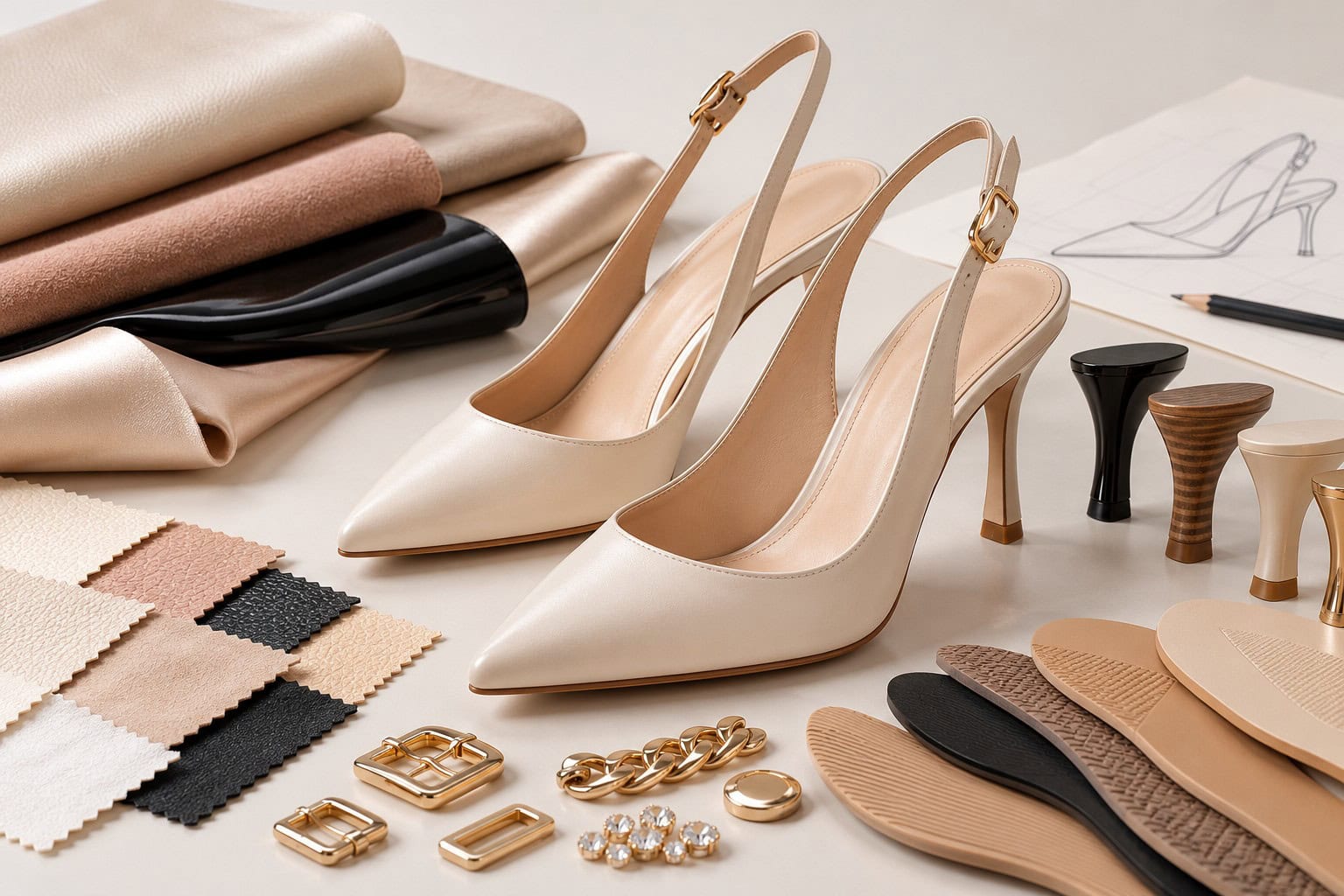
A brand may begin with a technical drawing, tech pack, reference photo, existing shoe, sketch, or even a general product idea. The shoe manufacturer then evaluates the construction and develops the components needed to turn that concept into an actual shoe.
Depending on the design, this may involve:
- Developing or selecting the shoe last
- Preparing patterns
- Selecting upper and lining materials
- Choosing the outsole
- Confirming heel height
- Developing insoles
- Selecting buckles, zippers, ornaments, or other hardware
- Testing logo placement
- Confirming basic construction methods
The purpose of the first development sample is not necessarily to produce a completely perfect shoe immediately.
Instead, it allows both the brand and the manufacturer to see, touch, fit, and evaluate the actual product. https://holdingstyle.com/sample-development-process/
What Should Brands Check on a Development Sample?
Once the first development sample is completed, we normally recommend that the customer evaluate more than just its appearance.
For example, the brand should check:
Overall Appearance
Does the finished shoe look like the original design?
The shape of the toe, heel height, upper proportions, opening, straps, decorations, and overall silhouette should all be reviewed.
Fit and Comfort
The customer should try on the sample whenever possible.
A shoe may look correct in photographs but still require adjustments to the width, instep, toe area, heel fitting, padding, or other areas.
Fit testing is particularly important when developing plus size or wide width women’s shoes, because simply increasing the length of a regular-size shoe does not automatically create a comfortable larger-size fit.
Fit, function, and performance are important considerations when evaluating footwear during product development.
Materials and Colors
The customer should check whether the selected upper, lining, outsole, and other materials create the expected appearance and hand feel.
Sometimes substitute materials may be used during an early development stage when a custom material, color, or component requires a higher MOQ.
Logo and Branding
Logo size, position, color, embossing, printing, metal hardware, and other branding details should also be checked.
If custom logo hardware requires a new mold, brands may sometimes choose to approve the basic sample first before investing in the final hardware tooling.
What Happens After the Development Sample?
After receiving the development sample, the customer can provide comments and requested changes.
For example:
- Make the forepart slightly wider
- Adjust the heel height
- Change the lining material
- Move the logo position
- Change the buckle color
- Adjust strap length
- Improve heel fitting
- Change the insole padding
- Modify the outsole finish
These comments become part of the next development stage.
For simple designs, the required changes may be relatively small. More complicated shoes may require additional adjustments or another fitting sample before all specifications are finalized.
This is a normal part of custom footwear development. https://holdingstyle.com/womens-shoe-testing/
What Is a Pre-Production Sample?
A pre-production sample, often called a PP sample, is a sample made before bulk production using the specifications that the brand and manufacturer intend to follow for the actual order.
Its purpose is different from the first development sample.
The development sample asks:
“Is this design working correctly, and what should we improve?”
The pre-production sample asks:
“Is this the final version that we are ready to produce?”
By this stage, important specifications should normally already be confirmed, including:
- Shoe last and fitting
- Size
- Upper material
- Material color
- Lining
- Heel and outsole
- Hardware
- Logo
- Stitching
- Construction
- Insole
- Finishing details
The PP sample therefore becomes an important reference for the production team and the customer.
Shoe Development Sample vs Pre-Production Sample: Key Differences
| Item | Development Sample | Pre-Production Sample |
|---|---|---|
| Main purpose | Develop and test the design | Confirm the final production standard |
| Development stage | Early stage | Before bulk production |
| Design changes | Expected and normal | Major changes should already be completed |
| Fit testing | Important | Final fit confirmation |
| Materials | May include temporary alternatives | Final confirmed materials are preferred |
| Logo | May still be adjusted | Final logo should normally be confirmed |
| Hardware | May use available components | Final components should normally be confirmed |
| Production reference | No | Yes |
| Customer approval | Development feedback | Final approval before production |
Why Is a Pre-Production Sample Important?
Skipping the PP sample may appear to save time, but for custom footwear it can create unnecessary production risks.
Imagine that the customer receives the first development sample and requests several changes:
“The forepart should be wider, the logo should move higher, the lining should change to sheepskin, and the buckle should be changed to gold.”
These instructions may sound clear in an email or message.
However, producing 100 or 200 pairs based only on written comments can create misunderstandings.
When these changes are incorporated into a physical PP sample, both sides can see exactly how the final shoe looks before production starts.
That gives the brand an opportunity to say:
Approved — please proceed with bulk production.
It also gives the factory a physical reference standard for production and quality control.
Does Every Shoe Order Need a Pre-Production Sample?
Not every project follows exactly the same sampling process.
The number of samples required depends on factors such as:
- Complexity of the shoe
- Number of modifications
- Whether a new shoe last is being developed
- Special materials
- Custom outsole development
- Custom hardware
- Fit requirements
- Size range
- Brand quality requirements
A relatively simple shoe using existing components may move through development quickly.
A highly customized high heel, boot, wide-width shoe, or design involving new molds and special components may require more development work.
The goal should not be to create as many samples as possible.
The goal is to resolve important problems before they become problems in bulk production.
Why PP Samples Are Especially Important for Custom and Private Label Shoes
For private label and OEM footwear projects, every brand can have different requirements.
One customer may prioritize a specific leather texture. Another may require an exact heel height, custom metal logo, special fitting, branded insole, or extended size range.
This makes final confirmation particularly important.
A properly approved pre-production sample helps establish a clear standard between the brand and the shoe factory.
It can also make later QC inspections more straightforward because the production team has an approved reference to compare against.
What Should a Brand Approve Before Bulk Shoe Production?
Before giving final production approval, we recommend checking the PP sample carefully.
Brands should confirm:
- Overall design and shape
- Fitting and comfort
- Shoe size
- Width
- Materials
- Colors
- Heel height
- Outsole
- Hardware
- Logo position and size
- Stitching
- Insole
- Finishing
- Any special construction requirements
If something important is still incorrect, it is much better to identify it at this stage than after hundreds of pairs have been produced.
A Typical Custom Shoe Sampling Process
At HoldingStyle, the exact process can vary depending on the project, but a typical custom women’s shoe development process may look like this:
1. Design & Requirements
The customer sends a design, tech pack, reference image, existing sample, or product idea. We discuss the construction, size, materials, colors, logo, heel, outsole, and other requirements.
2. Material Confirmation
Before making the sample, suitable materials and components are confirmed with the customer.
3. Development Sample
Our sample team develops the first physical shoe. We check the sample internally and can provide photos and videos before shipment.
4. Customer Testing & Feedback
The customer receives the sample, checks the appearance and workmanship, and tests the fitting where applicable.
5. Revisions
The customer provides any changes required for the final product.
6. Pre-Production Sample
After the order specifications and required modifications are confirmed, a PP sample can be prepared according to the final requirements.
7. Final Approval
The customer checks and approves the pre-production sample.
8. Bulk Production
After final approval, production begins according to the confirmed specifications and approved sample.
Common Questions About Shoe Development Samples and PP Samples
Can I start production after approving the first shoe sample?
It depends on the project. If the first sample requires no meaningful changes and all production specifications are already finalized, the process may be simpler. However, when fit, materials, construction, logos, or other details have been changed, final confirmation before bulk production is strongly recommended.
Is a PP sample the same as a development sample?
No. A development sample is primarily used to develop and evaluate the shoe, while a PP sample is used to confirm the final specifications before production.
Can I change the design after seeing the first sample?
Yes. Making reasonable adjustments after evaluating the first physical sample is a normal part of footwear development.
Why can’t the factory simply make the first sample perfect?
A custom shoe combines many variables: shoe last, pattern, materials, heel, outsole, fitting, hardware, construction, and branding. Some issues can only be properly evaluated after the first physical shoe has been produced and tested.
Can plus size and wide width shoes require additional fitting samples?
Yes. Extended-size and wide-width footwear can require additional attention to last proportions, forepart width, instep volume, heel fitting, outsole dimensions, and component compatibility. Fit confirmation is therefore particularly important.
Final Thoughts
Understanding Shoe Development Sample vs Pre-Production Sample requirements can help footwear brands manage product development more efficiently and reduce unnecessary risks before bulk production.
A development sample is used to turn an idea into a physical product, test the design and fitting, and identify necessary improvements. A pre-production sample is used to confirm the final materials, construction, fitting, colors, logos, hardware, and other specifications before mass production begins.
At HoldingStyle, we are a professional women’s shoe manufacturer in China, providing OEM & ODM shoe manufacturing, private label footwear, custom shoe development, sampling, and bulk production for international footwear brands.
We manufacture a wide range of women’s footwear, including high heels, pumps, sandals, flats, boots, plus size shoes, and wide width women’s shoes. From your initial design or reference image to sample development, material selection, fitting adjustments, PP sample approval, bulk production, QC, and shipping, our team can support you throughout the complete footwear manufacturing process.
Have a new shoe design or want to develop a sample?
Contact HoldingStyle:
Website: https://holdingstyle.com
Email: [email protected]
WhatsApp: +86 186 6415 5853
Send us your design, tech pack, reference image, or existing shoe sample, and we will help you evaluate the most suitable sampling and production solution for your project.