How Shoe Factories Turn One Sample Size Into a Full Size Range
When a footwear brand develops a new women shoe, the first physical sample is usually made in only one size. It may be US 8, EU 38, US 11 Wide, or another size selected as the development sample.
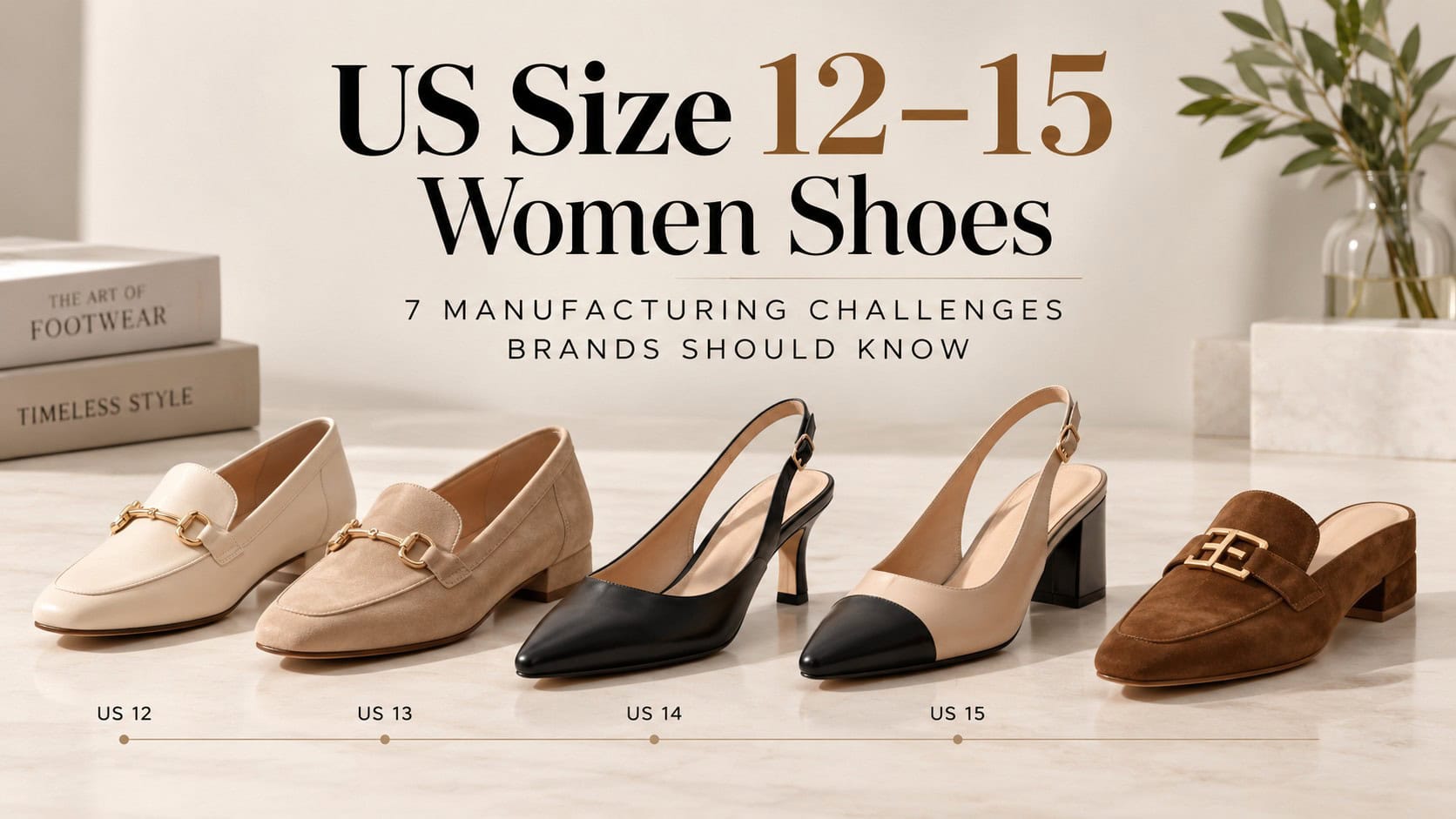
But a production order may eventually require US 6–12, EU 36–42, or even an extended size range such as US 10–15.
So how does a shoe factory turn one approved sample into a complete production size range?
The answer is shoe size grading.
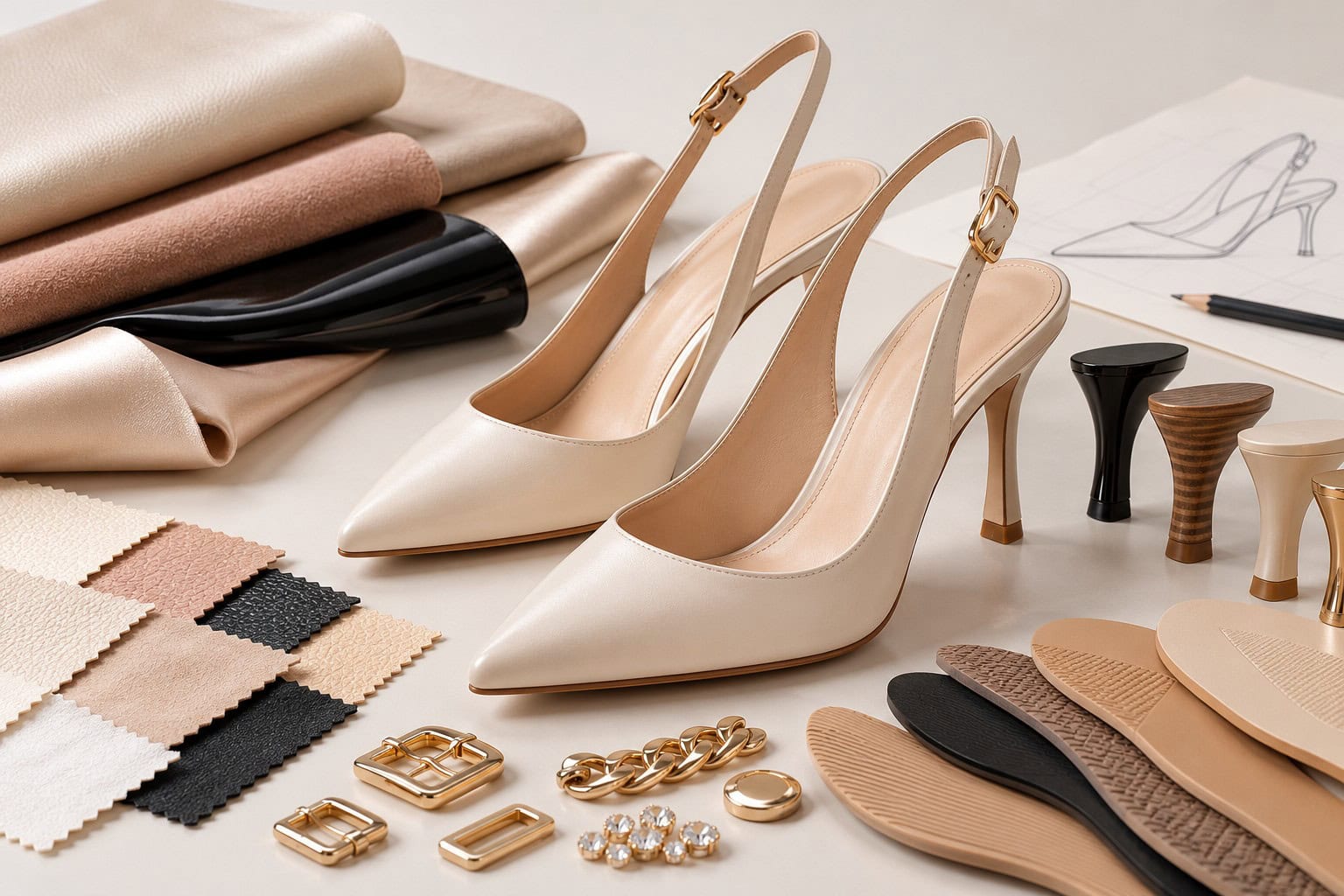
Shoe size grading is much more than simply making a shoe longer or shorter. The factory must coordinate the shoe last, upper pattern, outsole, heel, insole and other components so that the design, fit and proportions remain consistent across different sizes.
For fashion brands developing regular, wide width or plus size women shoes, understanding this process can help prevent fitting problems before bulk production begins.
What Is Shoe Size Grading?

Shoe size grading is the process of developing multiple shoe sizes from an approved base size.
For example, a brand may first approve a women shoe sample in US size 8. After the fit, appearance and construction are confirmed, the manufacturer can develop the remaining sizes required for production.
A size range might look like:
| Development Stage | Example |
|---|---|
| Base sample size | US Women 8 |
| Production range | US Women 6–12 |
| Width | Standard |
| Approved design | Slingback Flat |
| Final goal | Full production size range |
The US 8 sample becomes the reference point, but the factory still needs to correctly develop all of the other sizes.
This process is called grading.
International footwear sizing systems are not identical. ISO 19407:2023 provides shoe size conversion guidance covering major systems including European, UK, US and Mondopoint sizing.
Why Can’t a Shoe Factory Simply Scale the Shoe Up or Down?
A shoe is a three-dimensional product designed around the human foot.
If every dimension were increased by the same percentage, the larger shoe could become too wide, too tall or visually unbalanced. The same problem can happen when producing smaller sizes.
For example, a pointed-toe pump in EU 37 may look elegant and well proportioned. If the entire design is simply enlarged to EU 42 without adjusting the pattern and design proportions, the toe may appear excessively long.
The factory therefore needs to consider several elements separately:
- Foot length
- Ball width
- Ball girth
- Instep
- Heel width
- Toe shape
- Upper pattern position
- Strap position
- Vamp depth
- Outsole dimensions
- Heel proportions
This becomes even more important when developing plus size women shoes or extended sizes.
Step 1: Develop and Approve the Base Sample
Before creating the complete size range, the factory normally develops one base size first.
If your project is still at the concept stage, a professional manufacturer can often begin development from a sketch, reference image, mood board or technical drawing before creating the first physical sample.
For example:
US Women 8 — Standard Width
or
US Women 11 — Wide Width
The purpose of this first sample is to evaluate the fundamental design.
The brand should check:
Fit: Is the shoe comfortable in the toe, ball, instep and heel areas?
Appearance: Are the toe shape, topline, vamp and overall proportions correct?
Construction: Does the shoe provide the expected flexibility, stability and support?
Materials: Are the upper, lining, insole and outsole suitable for the design?
Professional footwear fitting considers the relationship between foot dimensions, shoe lasts and the intended target market. Organizations such as SATRA also provide footwear fitting, last assessment and fit evaluation services for the footwear industry.
It is much easier to make corrections at this stage than after the entire size range has already been developed.
That is why an approved sample is an important reference for subsequent shoe size grading.
Step 2: Grade the Shoe Last

The shoe last forms the three-dimensional foundation of the shoe.
The last plays a major role in determining shoe shape, fit, width and internal volume. Brands that need a better understanding of this process can read our guide to custom shoe last development for women shoes.
Once the base last has been approved, the required sizes can be developed around the same general shape and fitting concept.
For example:
EU 38 approved last → EU 36 / 37 / 39 / 40 / 41 / 42
However, last grading does not mean that every dimension changes at exactly the same rate.
The manufacturer must maintain appropriate relationships between length, width, girth, heel area and other measurements.
The goal is to preserve the character of the original last while creating suitable dimensions for each shoe size.
This is particularly important for brands developing a distinctive toe shape or specific fitting standard.
Step 3: Grade the Upper Patterns

The next important process is pattern grading.
The upper pattern includes the individual pieces used to construct the upper of the shoe.
Depending on the design, these may include:
- Vamp
- Quarters
- Straps
- Toe pieces
- Heel sections
- Tongue
- Lining patterns
- Decorative panels
These patterns must correspond with the graded lasts.
Consider a slingback shoe.
When the shoe size changes, the factory may need to adjust not only the main upper pattern but also the slingback strap length and buckle position.
For a Mary Jane shoe, the instep strap must remain correctly positioned across different sizes.
For a pump, the topline and heel fit need to remain balanced.
Therefore:
Last grading and pattern grading are related, but they are not the same process.
Both must work together.
Step 4: Match the Outsole to Each Size
The outsole also needs to correspond with the graded shoe lasts.
If a factory uses an existing outsole mould, the available outsole size range should be checked during the early development stage.
For example, a brand may want:
EU 36–44
but an existing outsole mould may only be available in:
EU 36–41
In that situation, the factory and brand need to decide whether to find another existing outsole, develop additional moulds or adjust the planned size range.
This is one reason we recommend discussing the complete target size range before sample development begins, even if the first prototype is made in only one size.
It can prevent additional tooling costs or design changes later.
Step 5: Check Heels and Other Size-Dependent Components
Not every shoe component can automatically be used across every size.
Depending on the shoe construction, the factory may also need to check:
Heels: Heel components need to work correctly with the outsole and shoe proportions.
Insoles: Insoles and cushioning components need corresponding sizes.
Shanks: The required length and construction can vary with size.
Footbeds: Molded footbeds need to correspond with the intended size range.
Toe puffs and counters: Internal reinforcement components should fit the graded upper correctly.
This is particularly important when a design uses custom molded components.
Step 6: Maintain the Visual Proportions of the Original Design
Size grading is not only about fit.
It is also about preserving the designer’s original visual concept.
Imagine a pump with a decorative metal buckle on the vamp.
If exactly the same buckle is used from EU 35 through EU 44, it may appear relatively large on the smallest size and relatively small on the largest size.
The same issue can occur with:
- Bows
- Chains
- Crystals
- Metal logos
- Buckles
- Cut-outs
- Straps
- Decorative stitching
Factories therefore need to consider how design details appear across the complete size range.
For most commercial footwear, brands try to maintain the same overall design identity while keeping the proportions visually balanced.
What Is a Size Set Sample?
After the base sample is approved and grading has been completed, some brands request additional sizes for checking before bulk production.
This may be referred to as a size set or size set sample.
For example, instead of checking every single size from US 6–12, a brand might evaluate selected sizes across the range.
This can help identify problems that may not appear in the original base size.
The exact size-set procedure depends on the design, size range, construction and buyer’s quality requirements.
For a relatively standard size range, the process may be straightforward.
For an unusually broad or extended size range, additional fitting checks can be especially valuable.
Regular Size Grading vs Extended Size Grading
Extended size development deserves additional attention.
Suppose a brand wants to produce:
US Women 10–15
or
EU 42–46
A manufacturer should not automatically assume that the same fitting approach used for smaller standard sizes will work perfectly throughout the extended range.
Larger sizes can require careful evaluation of:
- Ball girth
- Instep volume
- Heel fit
- Toe room
- Strap length
- Upper proportions
- Outsole availability
- Structural support
This is particularly important when developing plus size women shoes.
For brands considering larger size markets, our Extended Size Women Shoes guide explains additional design and development considerations for sizes such as EU 43–46.
The goal is not simply to create a longer shoe. The goal is to maintain the intended fit, appearance and comfort across the target customer size range.
Size and Width Are Two Different Things

Another important point for footwear brands is that shoe size and shoe width are not the same measurement.
For example:
US 11 Standard
and
US 11 Wide
have the same nominal shoe size, but they should not automatically use identical fitting specifications.
A brand may want to develop:
- Standard width
- Wide width
- Extra wide width
Different width requirements may require different lasts rather than simply adding extra material to the upper.
This is why brands planning wide width women shoes should define their width strategy early in the development process.
Width planning becomes particularly important for categories where fit and extended sizing are key considerations, such as custom wide width and plus size wedding shoes.
Example: From One US 8 Sample to US 6–12 Production
Here is a simplified example.
A fashion brand develops a new slingback pump.
The first sample is:
US Women 8 / Standard Width
After receiving the sample, the brand tests the fit and requests a small adjustment to the slingback strap.
A revised sample is made and approved.
The factory can then proceed with the grading process:
1. Base sample approved — US 8
↓
2. Last grading — US 6–12
↓
3. Upper pattern grading
↓
4. Outsole and heel size matching
↓
5. Strap and buckle positioning checked
↓
6. Selected size samples checked if required
↓
7. Pre-production sample confirmed
↓
8. Bulk production begins
Before bulk manufacturing begins, brands may also use a pre-production sample to confirm the final construction, materials, fit and production specifications. Learn more about the difference between a shoe development sample and a pre-production sample.
This illustrates why approving one sample does not mean the factory simply presses a button and automatically creates all the other sizes.
There are several technical steps between sample approval and full size production.
Why Brands Should Decide Their Size Range Early
One common mistake among new footwear brands is waiting until after sample approval to decide the final size range.
For example, a brand initially tells the factory:
We want EU 36–41.
After the sample is approved, the brand decides to add EU 42, 43 and 44.
This may sound like a small change, but the additional sizes could affect:
- Last availability
- Outsole mould availability
- Heel components
- Pattern grading
- Material consumption
- Packaging
- Production planning
- Development cost
For this reason, brands should ideally tell the manufacturer the maximum intended size and width range at the beginning of the project.
You do not necessarily need to produce every size immediately, but the manufacturer can consider the future size range when selecting lasts, outsoles and construction methods.
Common Shoe Size Grading Mistakes
Several problems can occur when size grading is not considered early enough.
Choosing an outsole with an insufficient size range
A beautiful existing outsole may work for EU 36–41 but become a problem if the brand later decides to offer EU 42–45.
Treating wide width as a larger standard size
Increasing length does not automatically provide the correct width and volume.
Ignoring strap grading
Slingbacks, sandals and Mary Jane shoes can develop fitting problems if strap lengths and positions are not properly adjusted.
Focusing only on the base size
A perfect US 8 sample does not automatically guarantee that US 6 or US 12 will fit equally well.
Adding extended sizes too late
Planning extended sizes after tooling and sample development may increase both development time and cost.
What Should You Tell Your Shoe Manufacturer Before Sampling?
Before developing your first sample, provide as much information as possible about the intended commercial size range.
For example:
| Information | Example |
|---|---|
| Sample size | US Women 8 |
| Final size range | US Women 6–12 |
| Width | Standard |
| Future width plan | Wide width |
| Shoe category | Slingback Pump |
| Heel height | 55 mm |
| Outsole | Existing mould preferred |
| Target market | USA |
If you are developing plus size or wide width women shoes, tell the factory from the beginning.
Even when only one prototype is being developed initially, knowing the future size range helps the manufacturer make better technical decisions.
FAQ About Shoe Size Grading
What is shoe size grading?
Shoe size grading is the process of developing additional shoe sizes based on an approved base size while maintaining appropriate fit, construction and design proportions.
What is a base sample size?
The base sample size is the initial size used during product development and fitting. Once approved, it can serve as a reference for developing the remaining production sizes.
Does approving one shoe sample mean all sizes will fit the same?
Not necessarily. Different sizes may require additional checks, especially when the range is broad or includes extended sizes.
Is last grading the same as pattern grading?
No. Last grading develops the three-dimensional lasts in different sizes, while pattern grading adjusts the upper components to fit those lasts.
Can one shoe design be produced in regular and wide widths?
Yes, but the width should be considered during development. Depending on the fitting requirements, separate lasts may be required for standard, wide and extra wide versions.
Can a shoe factory develop US Women 10–15?
Yes, provided the necessary lasts, outsole sizes and components are available or can be developed. Extended size footwear should be planned from the beginning rather than added as an afterthought.
Develop Your Full Women Shoe Size Range With HoldingStyle
At HoldingStyle, we work with footwear brands on custom women shoe development from the first concept and sample through size development, pre-production confirmation and bulk manufacturing.
Our development capabilities include:
Regular sizes • Plus sizes • Extended sizes • Wide width • Extra wide width
Depending on your project, we can work with existing lasts and outsole moulds to help control initial development costs, or develop customized solutions when the design and fitting requirements call for them.
Whether you are developing pumps, flats, loafers, sandals, slingbacks or boots, defining your target size and width range early can make the development process more efficient.
If you already have a design sketch, reference shoe, tech pack or concept board, send us your design together with your target size range.
HoldingStyle – Custom Women Shoe Manufacturer
Email: [email protected]
WhatsApp: +86 186 6415 5853
Website: https://holdingstyle.com/