Choosing the right leather for luxury women’s shoes affects comfort, durability, appearance, fit, and production quality. This guide compares cow leather, sheepskin, and goat leather to help footwear brands select the right material for heels, boots, flats, sandals, and other premium women’s footwear.

Choosing the right upper material is essential for developing high-quality women’s shoes. This guide compares PU Leather vs Microfiber Leather for Women’s Shoes, covering durability, comfort, appearance, cost, and the best applications for fashion, plus size, and wide width footwear to help brands make informed sourcing decisions.

Learn how professional women’s shoe manufacturers test footwear before mass production. This guide explains material inspection, bonding strength, flexing, heel testing, size consistency, wear testing, and AQL quality inspection to help footwear brands improve product quality, reduce returns, and ensure consistent manufacturing standards.

Choosing the best heel height for women’s shoes is essential for comfort, style, and customer satisfaction. This guide explains different heel heights, their ideal applications, and how footwear brands can work with experienced manufacturers to develop comfortable, high-quality women’s shoes.

Discover how the right shoe last improves the fit, comfort, and quality of plus size shoes and wide width shoes. Learn the key factors in shoe last development and why choosing an experienced women’s shoe manufacturer is essential for successful custom footwear production.

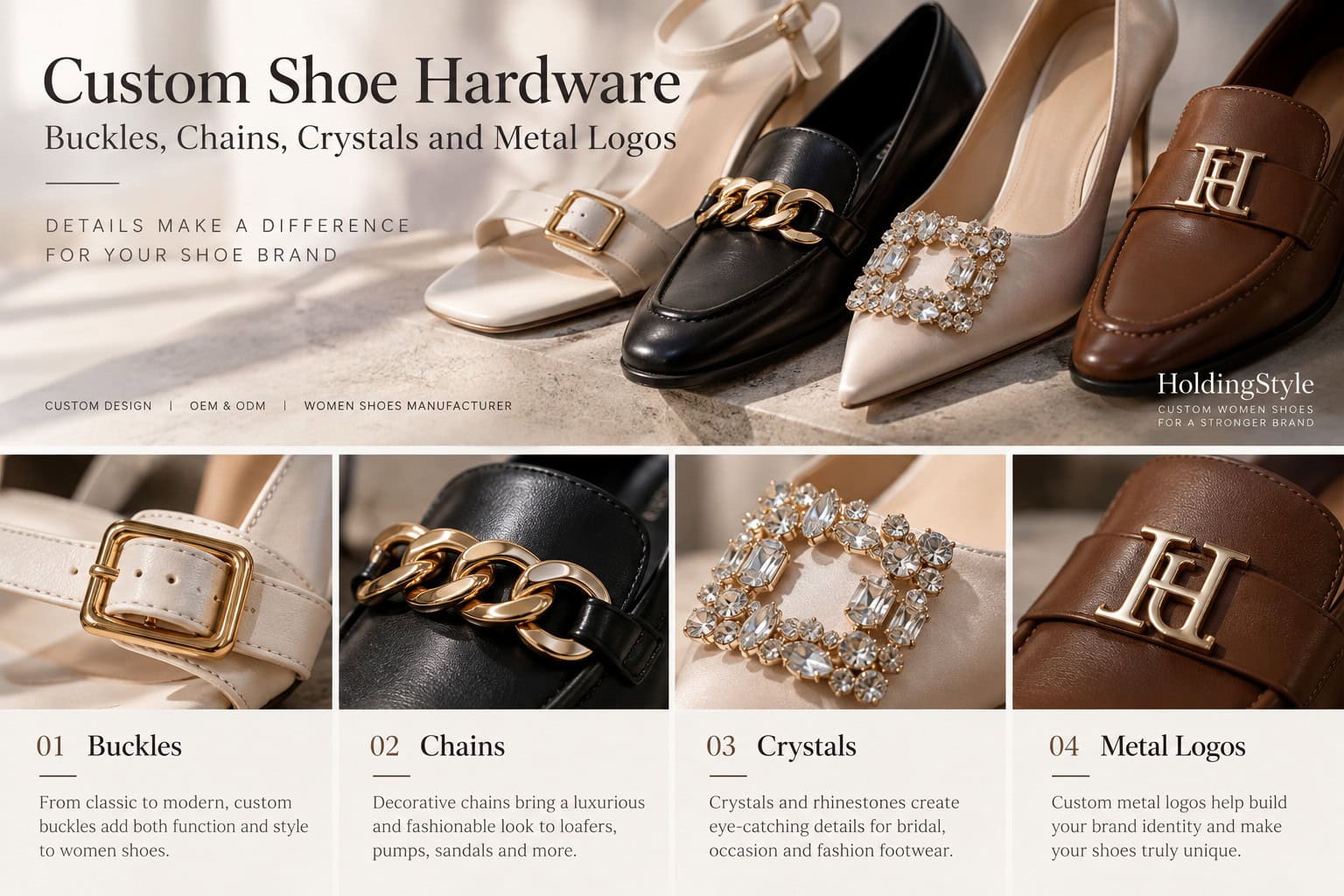
Learn how to choose custom shoe hardware including buckles, chains, crystals and metal logos for women shoes. Explore materials, finishes, sizing, attachment methods, custom molds and key considerations during shoe sample development.
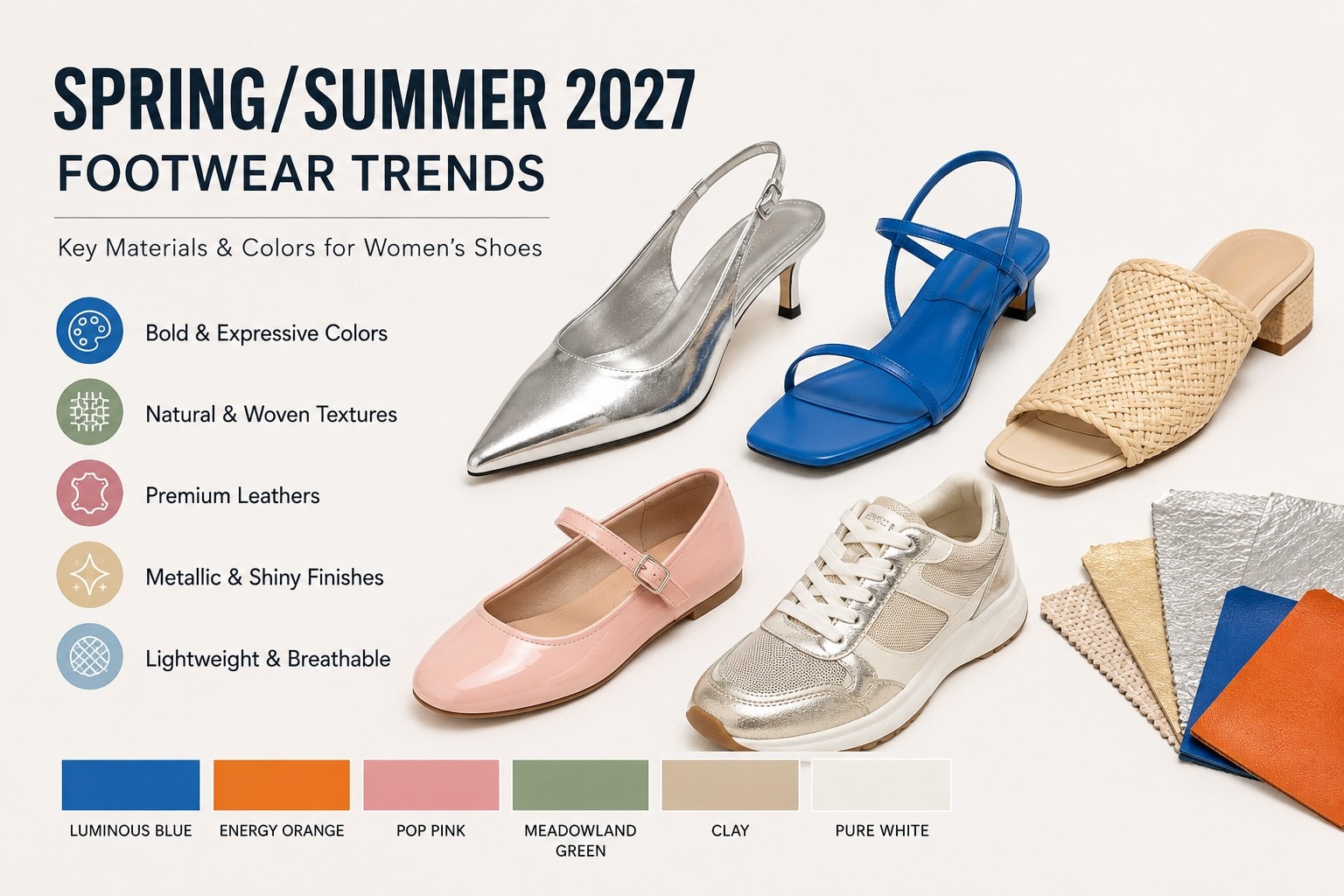
Discover the key Spring Summer 2027 footwear materials and color trends for women’s shoes, from metallic finishes and soft leather to mesh, woven textures and bold seasonal colors. Learn what brands should prepare now for S/S 2027 development.

Choosing the right leather for luxury women’s shoes affects comfort, durability, appearance, fit, and production quality. This guide compares cow leather, sheepskin, and goat leather to help footwear brands select the right material for heels, boots, flats, sandals, and other premium women’s footwear.

Choosing the right upper material is essential for developing high-quality women’s shoes. This guide compares PU Leather vs Microfiber Leather for Women’s Shoes, covering durability, comfort, appearance, cost, and the best applications for fashion, plus size, and wide width footwear to help brands make informed sourcing decisions.

Learn how professional women’s shoe manufacturers test footwear before mass production. This guide explains material inspection, bonding strength, flexing, heel testing, size consistency, wear testing, and AQL quality inspection to help footwear brands improve product quality, reduce returns, and ensure consistent manufacturing standards.

Choosing the best heel height for women’s shoes is essential for comfort, style, and customer satisfaction. This guide explains different heel heights, their ideal applications, and how footwear brands can work with experienced manufacturers to develop comfortable, high-quality women’s shoes.

Discover proven Women’s Shoe Quality Control methods that help footwear brands prevent production defects, improve consistency, reduce returns, and deliver high-quality women’s shoes every time.

Selecting the best materials for women’s shoes is one of the most important decisions for any footwear brand. Whether you are launching a new private

Leather sole vs rubber sole—what’s the difference? Learn the pros, cons, durability, water resistance, comfort, and best applications of each outsole to choose the right option for your women’s shoe brand.

Discover how the right shoe last improves the fit, comfort, and quality of plus size shoes and wide width shoes. Learn the key factors in shoe last development and why choosing an experienced women’s shoe manufacturer is essential for successful custom footwear production.

A strict Quality Control Process for Women’s Footwear is essential for maintaining product consistency, reducing defects, and protecting brand reputation. In today’s highly competitive footwear

Learn how to choose custom shoe hardware including buckles, chains, crystals and metal logos for women shoes. Explore materials, finishes, sizing, attachment methods, custom molds and key considerations during shoe sample development.

Discover the key Spring Summer 2027 footwear materials and color trends for women’s shoes, from metallic finishes and soft leather to mesh, woven textures and bold seasonal colors. Learn what brands should prepare now for S/S 2027 development.

Choosing the right leather for luxury women’s shoes affects comfort, durability, appearance, fit, and production quality. This guide compares cow leather, sheepskin, and goat leather to help footwear brands select the right material for heels, boots, flats, sandals, and other premium women’s footwear.

Choosing the right upper material is essential for developing high-quality women’s shoes. This guide compares PU Leather vs Microfiber Leather for Women’s Shoes, covering durability, comfort, appearance, cost, and the best applications for fashion, plus size, and wide width footwear to help brands make informed sourcing decisions.

Learn how professional women’s shoe manufacturers test footwear before mass production. This guide explains material inspection, bonding strength, flexing, heel testing, size consistency, wear testing, and AQL quality inspection to help footwear brands improve product quality, reduce returns, and ensure consistent manufacturing standards.

Choosing the best heel height for women’s shoes is essential for comfort, style, and customer satisfaction. This guide explains different heel heights, their ideal applications, and how footwear brands can work with experienced manufacturers to develop comfortable, high-quality women’s shoes.

Discover proven Women’s Shoe Quality Control methods that help footwear brands prevent production defects, improve consistency, reduce returns, and deliver high-quality women’s shoes every time.

Selecting the best materials for women’s shoes is one of the most important decisions for any footwear brand. Whether you are launching a new private

Leather sole vs rubber sole—what’s the difference? Learn the pros, cons, durability, water resistance, comfort, and best applications of each outsole to choose the right option for your women’s shoe brand.

Discover how the right shoe last improves the fit, comfort, and quality of plus size shoes and wide width shoes. Learn the key factors in shoe last development and why choosing an experienced women’s shoe manufacturer is essential for successful custom footwear production.

A strict Quality Control Process for Women’s Footwear is essential for maintaining product consistency, reducing defects, and protecting brand reputation. In today’s highly competitive footwear
* Your data is securely protected for essential communications only. We won’t share your details or send spam emails, Privacy Policy *