Premium Women Shoes: What Makes a Shoe Look High Quality?
For footwear brands, creating premium women shoes is not simply about choosing expensive leather or adding luxury decorations. A shoe looks and feels premium when its materials, shape, construction, proportions and finishing work together as one complete product.
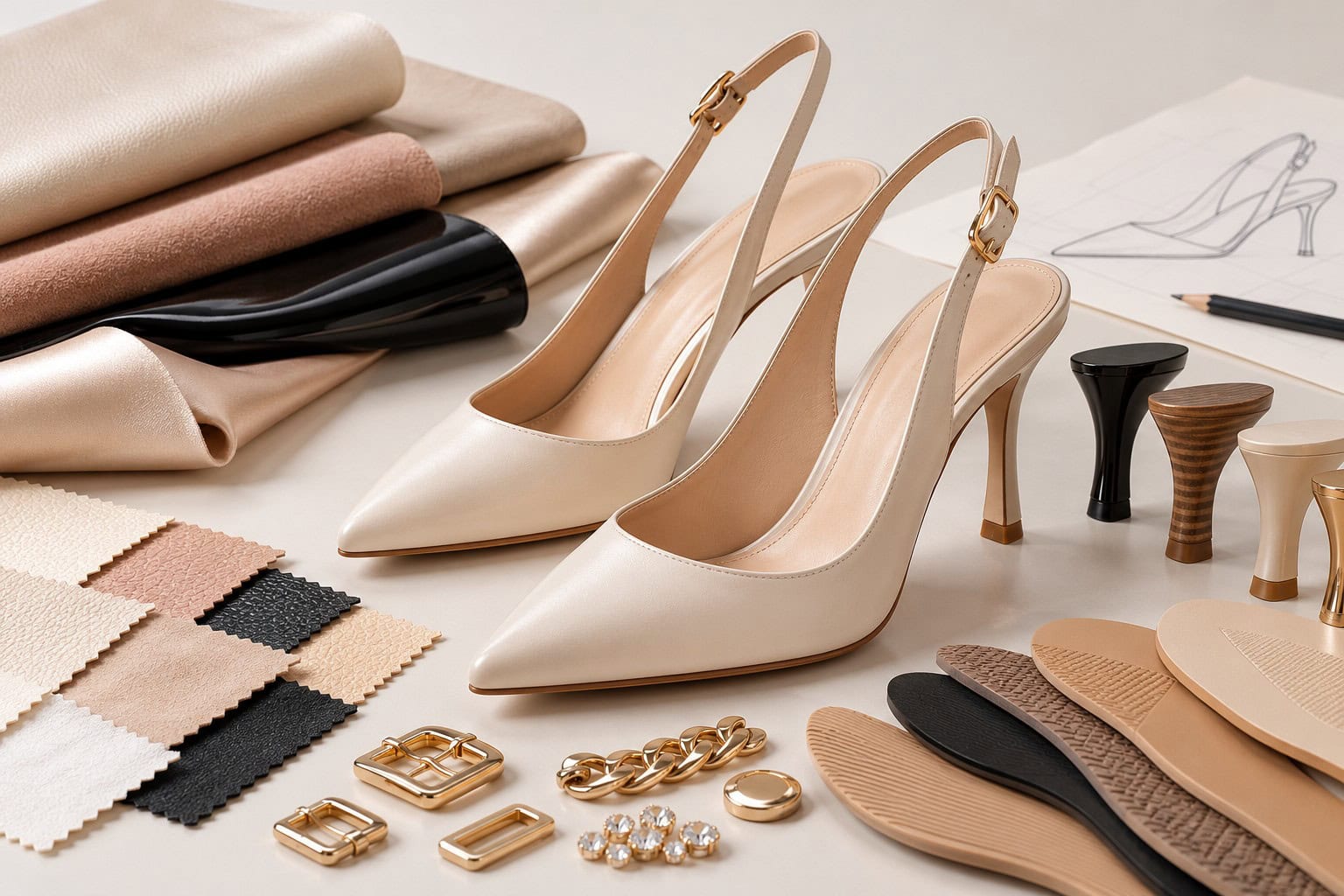
From a footwear manufacturer’s perspective, small details can make a major difference. The shoe last affects the overall silhouette. Upper materials influence texture and structure. Stitching, edge finishing, hardware, lining, outsole quality and color matching all contribute to how customers perceive the finished shoe.
This is especially important for brands developing custom collections. Understanding what makes premium women shoes look high quality can help brands make better decisions during material selection, sample development and bulk production.
1. Premium Women Shoes Start With the Right Upper Material

Upper material is one of the first things customers notice when they see or touch a shoe.
Common materials used in women shoe manufacturing include:
- Genuine leather
- Suede
- Microfiber
- PU synthetic leather
- Patent materials
- Satin
- Mesh
- Lace
- Textile materials
However, material price alone does not determine quality.
A high-quality microfiber with a smooth surface, consistent texture and good hand feel can create a more refined appearance than low-quality genuine leather with inconsistent grain or poor finishing.
The material also needs to suit the design.
Soft leather may work well for ballet flats and loafers, while structured pumps may require a material that can maintain a clean silhouette. Satin is frequently used for wedding and occasion shoes because of its elegant surface, while patent materials can create a sharper and more polished appearance.
When developing premium women shoes, footwear brands should therefore consider texture, thickness, flexibility, stretch, color consistency and durability—not simply the material name.
2. A Good Shoe Last Creates a Premium Shape
The shoe last is one of the most important elements in footwear development.
It determines the basic three-dimensional shape of the shoe, including:
- Toe shape
- Ball width
- Instep volume
- Heel shape
- Overall silhouette
- Fit and proportion
A beautiful design sketch cannot fully compensate for a poorly developed last.
For example, a pointed-toe pump needs an elegant transition from the forefoot into the toe. An almond-toe shoe needs balanced proportions, while a square-toe design should look modern without appearing excessively wide or heavy.
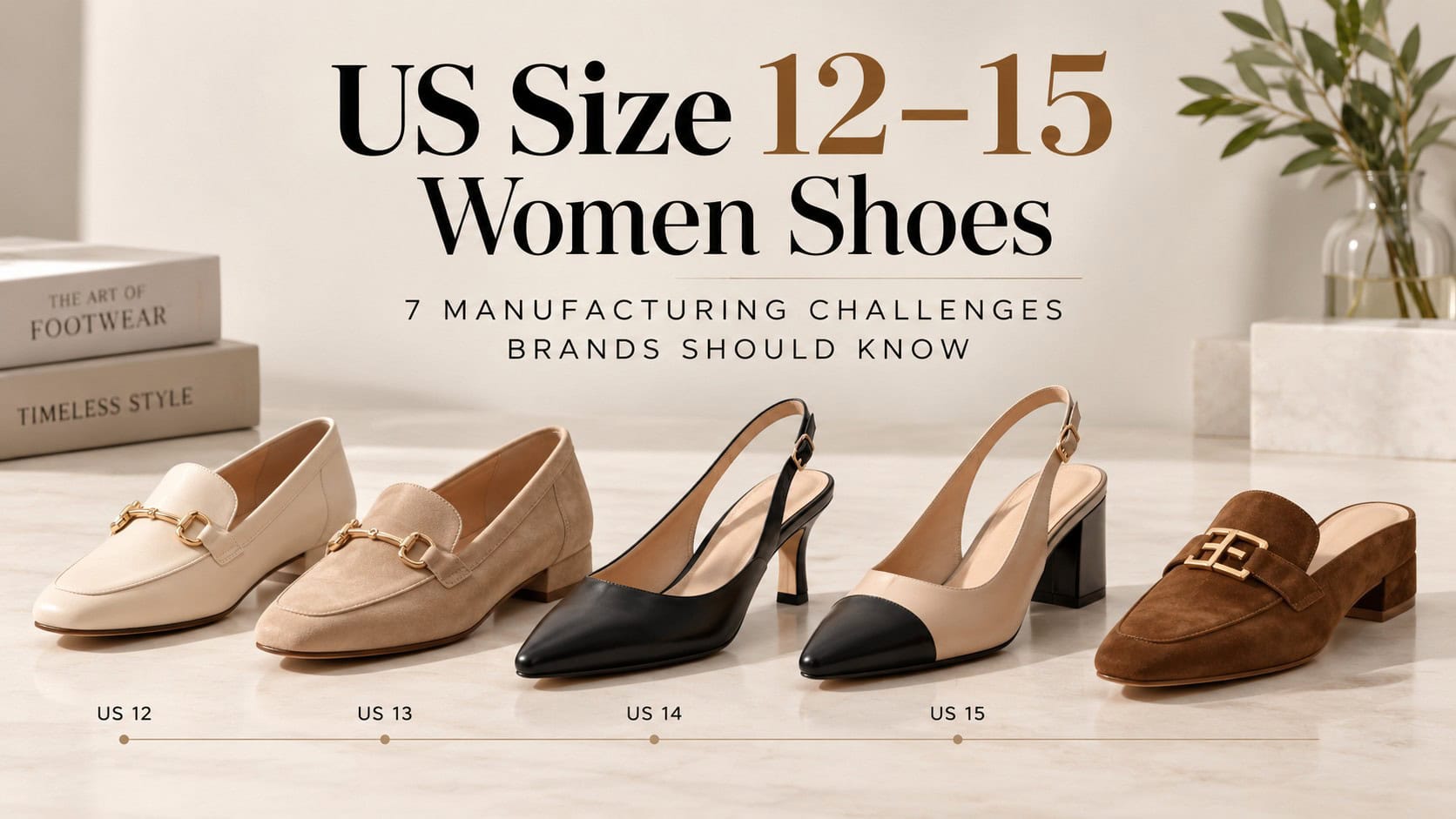
The same principle becomes even more important when developing wide width women shoes, plus size women shoes and extended size women shoes.
A shoe that looks elegant in EU37 should still look balanced in EU42, EU44 or EU46. Simply enlarging every part of the shoe does not always create the best result.
This is one reason extended size women shoes require attention to proportion, components and fitting rather than simply increasing shoe length.
For this reason, an experienced women shoe manufacturer should consider both fit and visual proportion during last development and size grading.
For a more detailed look at this process, see our guide to custom shoe last development for women shoes.
3. Proportion Is Essential for Premium Women Shoes
One of the biggest differences between an ordinary-looking shoe and a premium-looking shoe is often proportion.
Consider the relationship between:
- Toe length
- Vamp height
- Heel height
- Heel thickness
- Strap width
- Buckle size
- Outsole thickness
- Shoe opening
Each individual component may look good by itself, but the complete shoe can still feel visually unbalanced if these proportions do not work together.
For example, a delicate slingback upper combined with an excessively heavy heel may change the character of the design. Similarly, an oversized buckle can make an otherwise elegant flat look bulky.
This is particularly important in extended sizes. Hardware, straps and other visible details may need to be reviewed when developing larger sizes so that the original design intention is maintained.
4. Clean Stitching Makes Women Shoes Look Higher Quality

Stitching is a small manufacturing detail that customers notice quickly when it is poorly executed.
High-quality shoe stitching should be:
- Straight and clean
- Consistent in stitch length
- Properly tensioned
- Neatly connected at seams
- Symmetrical between left and right shoes
- Free from obvious loose threads
Minimalist designs require particular attention because there are fewer decorative elements to distract from stitching imperfections.
Thread selection also matters.
Some designs require thread that closely matches the upper material for a clean appearance. Others intentionally use contrasting stitching as part of the design.
In either case, stitching on premium women shoes should look deliberate, controlled and consistent.
5. Edge Finishing Can Make or Break the Appearance
Edge finishing is easy to overlook during the design stage, but it has a strong influence on the finished product.
Depending on the shoe construction and upper material, edges may be:
- Folded
- Bound
- Painted
- Raw-cut
- Covered
There is no single finishing method that is always more premium. The correct method depends on the shoe style and material.
What matters is execution.
Uneven trimming, rough edges, visible adhesive or inconsistent edge paint can make an otherwise attractive shoe look poorly manufactured.
Clean edge finishing is therefore an important part of producing high quality women shoes.
6. Heel Shape and Heel Finishing Affect the Entire Design
For pumps, sandals and boots, the heel is not simply a functional component. It is an important part of the visual design.
Footwear developers need to consider:
- Heel height
- Heel shape
- Heel thickness
- Heel position
- Heel covering
- Connection with the outsole
A slim heel can create an elegant appearance, while a block heel may provide a stronger and more contemporary look.
When heels are covered with leather, satin or another material, the covering should be smooth and properly aligned. Wrinkles, poor seams or visible glue can immediately reduce the perceived quality.
The heel must also work correctly with the shoe last and outsole. Changing heel height is not always as simple as replacing one heel with another because the last pitch, outsole construction and balance of the shoe may also need adjustment.
7. Premium Shoe Hardware Should Complement the Design

Buckles, chains, crystals and metal logos can help create distinctive custom women shoes, but more decoration does not automatically mean more luxury.
Brands developing distinctive buckles, chains, crystals or metal logos can also learn more about custom shoe hardware development before deciding whether to use existing components or create custom tooling.
Premium shoe hardware should have:
- Clean plating
- Smooth edges
- Consistent color
- Suitable weight
- Secure attachment
- Appropriate proportions
Hardware color should also coordinate with the upper, heel and other components.
For example, gold hardware is available in many different shades. A bright yellow gold buckle may create a very different appearance from a softer champagne gold finish.
Custom metal logos are particularly useful for private label women shoes, but size and placement should be considered carefully.
A small, well-positioned logo can sometimes look more premium than a large and highly visible logo.
8. Lining, Insoles and Interior Details Matter
Customers do not judge shoes only from the outside.
Once they pick up the shoe or put it on, they also notice the interior.
Depending on the product positioning, footwear brands may choose:
- Genuine leather lining
- Microfiber lining
- PU lining
- Textile lining
The insole or sock is another important branding opportunity.
Brand logos can be printed, embossed or applied using other suitable techniques depending on the material and design.
Comfort can also be improved with appropriate cushioning materials such as foam, latex or memory foam.
For premium women shoes, the interior should feel like part of the complete product rather than an afterthought.
9. Outsole Quality Also Influences Premium Women Shoes
Brands often spend considerable time selecting the upper but pay less attention to the outsole.
That can be a mistake.
Customers see the outsole when they pick up the shoe, and poor outsole finishing can affect the overall impression of quality.
Important details include:
- Clean outsole edges
- Accurate color
- Secure bonding
- Appropriate flexibility
- Surface finishing
- Logo placement
- Minimal visible adhesive
Different outsole materials also create different appearances and performance characteristics.
Rubber, TPR, TPU, EVA and leather can all be appropriate depending on the shoe category, target price and intended use.
If you are comparing outsole options, see our complete guide to women shoe outsole materials, including Rubber, TPR, TPU, EVA and Leather.
A premium appearance does not require every shoe to use a leather outsole. A well-designed rubber or TPR outsole can also look refined when its shape, surface and finishing match the overall design.
10. Color Matching Is More Important Than Many Brands Expect
One shoe can contain many separate materials and components.
For example:
Upper material + heel + outsole + lining + stitching + edge paint + hardware + insole.
Even when every individual material is good quality, poor color coordination can make the finished shoe look inconsistent.
This is especially noticeable with:
- Black
- White
- Cream
- Nude
- Metallic colors
Two materials described as “black” may have slightly different undertones or levels of gloss.
During sample development, materials should therefore be evaluated together under similar lighting rather than approved independently.
Good color coordination helps premium women shoes achieve a cleaner and more intentional appearance.
11. Can Synthetic Materials Still Look Premium?
Absolutely.
One common misconception is:
Genuine leather = premium
Synthetic material = cheap
Footwear manufacturing is not that simple.
High-quality microfiber and synthetic leather can offer excellent color consistency, smooth surfaces and attractive textures. They may also suit brands looking for specific price points or non-leather material options.
Meanwhile, genuine leather varies greatly in grade, surface quality and finishing.
A poorly selected or poorly manufactured genuine leather shoe can look less refined than a well-developed microfiber shoe.
The important question is not simply:
Is it leather?
A better question is:
Is this material suitable for the design, construction, target price and quality level of the shoe?
That is a much more useful approach when developing a commercial footwear collection.
12. How Can Brands Make Shoes Look Premium Without Making Them Too Expensive?
New footwear brands often need to balance quality with budget.
Fortunately, creating premium women shoes does not mean every component must be the most expensive available option.
Brands can prioritize areas that have a strong influence on the customer’s perception of the finished product.
These often include:
- Shoe last and overall shape
- Upper material
- Hardware
- Stitching
- Edge finishing
- Insole presentation
- Color matching
- Quality control
It may also be possible to use an existing outsole or heel when it suits the design rather than immediately investing in completely new tooling.
The development budget can then be focused on the elements that make the product distinctive, such as upper design, materials, colors, branding and hardware.
This is particularly useful for new brands launching their first collection.
13. Quality Control Protects the Premium Appearance

Even a well-developed sample does not guarantee that every production pair will automatically look the same.
Quality control is essential during bulk production.
Common issues that should be checked include:
- Glue marks
- Loose threads
- Material wrinkles
- Scratches
- Uneven stitching
- Color differences
- Incorrect logo placement
- Hardware defects
- Left and right shoe asymmetry
- Poor outsole bonding
For a premium footwear brand, consistency is extremely important.
A customer may forgive a small design preference, but visible manufacturing defects can quickly affect how they perceive the entire brand.
Professional footwear testing can also evaluate materials, components and finished footwear for factors such as performance and durability. Organizations such as SATRA provide testing and technical services specifically for the footwear industry.
Consistent quality in Premium Women Shoes also depends on close coordination between material suppliers, component suppliers and final assembly factories throughout the footwear supply chain.
14. Sample Development Is Critical for Premium Women Shoes
A shoe can look excellent in a sketch, 3D rendering or reference image but behave differently when converted into a physical product.
That is why sample development is so important.
During sampling, brands and manufacturers can evaluate:
- Overall silhouette
- Material texture
- Toe shape
- Shoe proportions
- Heel shape
- Hardware size
- Stitching
- Color matching
- Fit
- Comfort
- Finishing
If something does not look or fit correctly, it is much better to identify the issue during sample development than after bulk production has started.
For wide width women shoes, extra wide women shoes, plus size women shoes and extended sizes such as US10–15 or EU42–46, sample fitting is particularly important because fit and visual proportions both need careful consideration.
After the development sample has been approved, a pre-production sample can be used to confirm the final materials, colors, construction and branding details before bulk production.
Brands that are new to footwear development can read our guide to shoe development samples vs pre-production samples to understand the purpose of each stage.
FAQ About Premium Women Shoes
What makes women shoes look premium?
Premium women shoes usually combine appropriate materials, an attractive shoe last, balanced proportions, clean stitching, quality hardware, good color matching and careful finishing. No single material automatically makes a shoe premium.
Do premium women shoes have to use genuine leather?
No. High-quality microfiber and synthetic materials can also create a premium appearance when they are suitable for the design and manufactured with good finishing.
Why is the shoe last important for premium footwear?
The shoe last determines the basic shape, including the toe, forefoot, instep and heel. A well-developed last helps create an elegant silhouette and balanced proportions.
Can wide width and plus size women shoes still look elegant?
Yes. Wide width, extra wide and extended size shoes can maintain an elegant appearance when the last, pattern, outsole and visible components are developed with appropriate proportions.
Why should brands make samples before bulk production?
Samples allow brands to evaluate materials, proportions, fit, comfort, colors, hardware and finishing before committing to bulk production. This reduces the risk of discovering problems after production has started.
Develop Premium Women Shoes With an Experienced Manufacturer
Developing premium women shoes requires much more than selecting expensive materials. The final quality comes from the combination of design, shoe last, materials, construction, proportions, craftsmanship, finishing and quality control.
For footwear brands, many of these decisions should be evaluated during the sample development stage rather than after bulk production begins.
At HoldingStyle, we specialize in custom women shoe development and manufacturing, including Regular, Wide, Extra Wide, Plus Size and Extended Size women shoes.
We can support brands with custom designs, shoe lasts, materials, colors, hardware, branding, sample development, private label production and bulk manufacturing.
Whether you have a complete design, sketch or reference image, our team can help evaluate the project and develop it into a production-ready shoe while considering appearance, fit, quality and manufacturing feasibility.
HoldingStyle – Custom Women Shoe Manufacturer
Website: holdingstyle.com
Email: [email protected]
WhatsApp: +86 186 6415 5853
We can support brands with custom designs, shoe lasts, materials, colors, hardware, branding, sample development, private label production and bulk manufacturing.