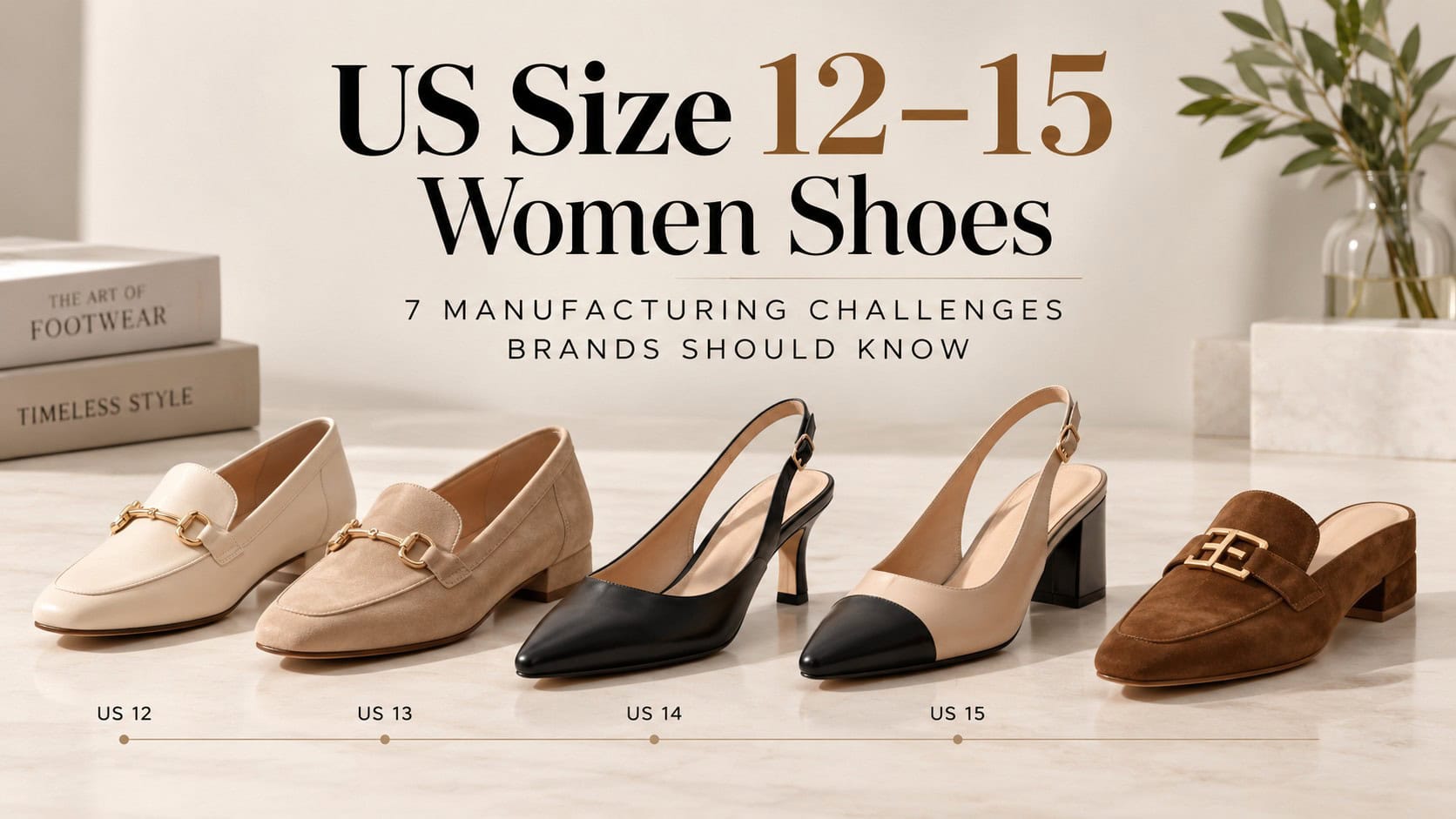
Fashion footwear is becoming more inclusive, but one part of the market still has a noticeable gap: fashionable shoes in extended women sizes.
Consumers who wear EU 43, 44, 45 or 46 often have fewer choices than shoppers wearing standard sizes. The problem is not simply finding shoes that fit. Many consumers want the same fashion choices available in mainstream sizes — stylish heels, ballet flats, Mary Janes, loafers, sandals and boots.
For footwear brands planning future collections, this gap could represent an important opportunity.
In 2027, Extended Size Women Shoes should not be viewed only as a specialist category. They can become part of a broader strategy around inclusive sizing, better fit and underserved consumer needs.
However, developing large sizes successfully requires more than simply making an existing shoe longer. Brands need to consider lasts, proportions, width, outsole sizing, heel stability, components and production quantities from the beginning.
Why Extended Size Women Shoes Deserve More Attention
For many years, fashion footwear collections have concentrated heavily on standard size ranges. Extended sizes were often added later, if they were offered at all.
This creates a simple problem.
A customer wearing EU 45 may find plenty of basic sneakers or practical shoes but have much more difficulty finding a fashionable pair of pumps, elegant Mary Janes or trend-led boots.
That difference creates an opportunity for brands.
The demand is not necessarily for shoes that look like large size shoes. Consumers often want exactly the opposite: footwear that looks just as fashionable as the styles displayed in standard-size collections.
This means Extended Size Shoes for Women can compete on more than fit. Design, materials, comfort, color and styling can all become important differentiators.
For emerging footwear brands, serving a more specific customer group can also provide a clearer brand identity than competing only in highly saturated standard-size categories.
Extended Size Is About Fashion, Not Just Shoe Size
One mistake brands can make is treating extended sizing purely as a technical sizing exercise.
The opportunity is broader.
A woman looking for EU 44 Women Shoes may also be searching for:
- elegant heels for an event
- fashionable ballet flats for everyday wear
- Mary Janes inspired by current trends
- stylish boots for autumn and winter
- sandals for summer
- loafers suitable for work
- wide width options that still look refined
This is why the phrase Fashionable Large Size Shoes matters.
Fit gets the customer into the product, but design is often what makes the customer want the product in the first place.
Brands entering this category should therefore ask:
Are we simply offering more sizes, or are we giving extended-size customers the same fashion choices as everyone else?
That distinction can influence the entire collection strategy.
Which Extended Size Women Shoes Could Offer Opportunities in 2027?
Not every brand needs to launch dozens of styles immediately.
A more practical strategy is to identify several categories where fashion and extended sizing can work particularly well together.
1. Large Size Ballet Flats and Mary Janes
Ballet flats and Mary Janes have returned strongly to fashion collections, with designers experimenting with different toe shapes, straps, mesh, velvet, embellishments and low-profile constructions.
For brands, Large Size Flats can be an interesting entry point into extended sizing.
However, proportion becomes important as sizes increase. Toe shape, vamp depth, strap position and outsole proportions may need adjustment to keep the shoe visually balanced.
Mary Janes also require attention to strap length and buckle positioning.
A well-developed EU 45 Mary Jane should look like the same fashion product as its EU 38 counterpart — not simply an enlarged version.
2. Large Size Heels and Pumps
Finding fashionable Large Size Heels can be particularly challenging for consumers at the upper end of the size range.
This creates an opportunity, but also a greater technical challenge for manufacturers.
As the shoe becomes larger, brands need to consider:
- heel stability
- heel mould availability
- outsole availability
- last proportions
- forepart width
- weight distribution
- comfort
- toe shape
A heel and outsole available in standard sizes may not automatically be available up to EU 45 or EU 46.
For this reason, brands planning Plus Size Heels should discuss the complete size range with their manufacturer before approving the initial design.
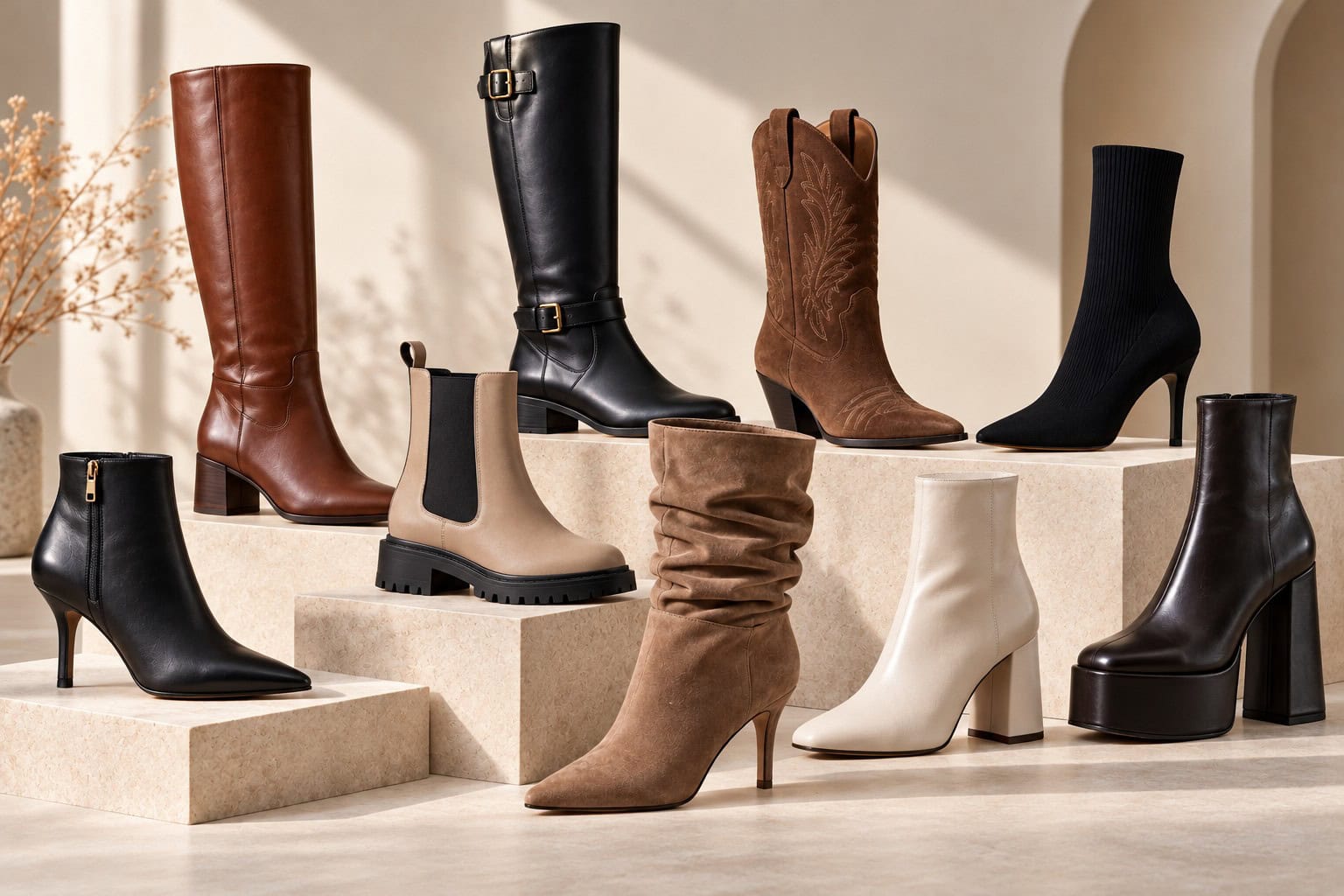
3. Large Size Boots
Boots provide another opportunity for brands developing Large Size Women Shoes.
An extended-size boot requires consideration not only of foot length but also ankle fit, shaft circumference and overall proportions.
This becomes particularly important for fitted ankle boots and tall boots.
Brands may also combine extended shoe sizing with different calf-width options, creating products that solve more than one fit problem.
This is where Plus Size Women Shoes and inclusive boot development can overlap with a broader fit strategy.
4. Large Size Sandals
Sandals may appear relatively simple, but fit can become very visible because much of the foot is exposed.
When developing Large Size Sandals, brands should consider:
- strap position
- strap length
- forefoot width
- heel seat
- toe position
- outsole proportions
- buckle adjustment range
A sandal that technically measures correctly can still look or feel wrong if the straps have simply been scaled proportionally from a smaller size.
For extended-size collections, fit testing becomes especially valuable.
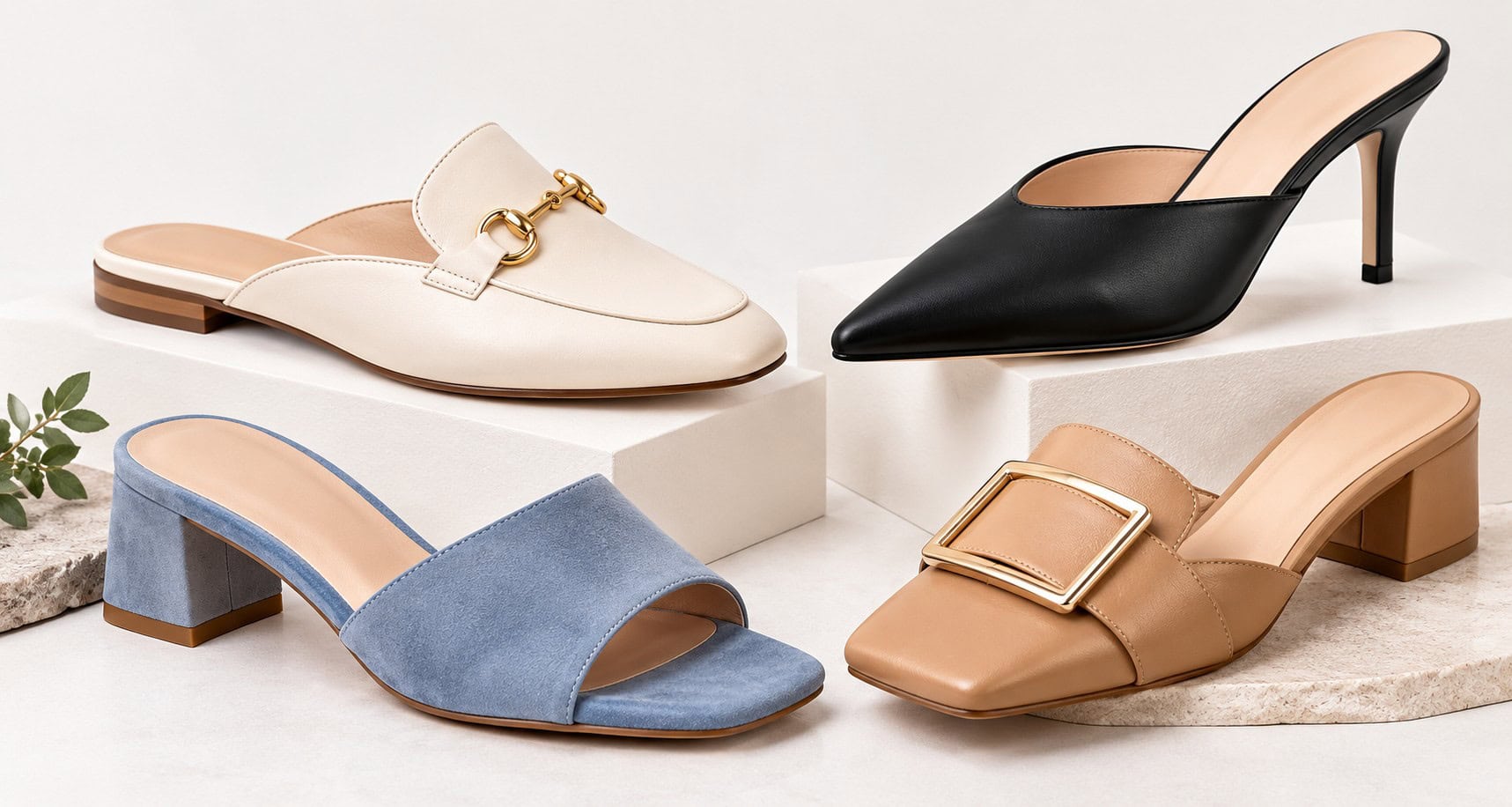
5. Loafers and Wide Width Flats
Loafers are useful for brands targeting customers looking for versatile everyday footwear.
They can also work particularly well when a brand wants to combine Extended Size Footwear with Wide Width Women Shoes.
But extended size and wide width are not the same thing.
A customer can have:
a long but relatively narrow foot,
or
a shorter but wider foot,
or
both a long and wide foot.
Brands should therefore avoid assuming that every customer wearing EU 44 automatically needs a very wide shoe.
Extended Size and Wide Width Are Different
This distinction is extremely important for product development.
Extended size primarily relates to the length and overall grading of the shoe into larger sizes.
Wide width relates to the internal volume and width required for a particular foot.
For example, two consumers may both wear EU 43 but require different widths.
For a more detailed explanation of footwear width systems, see our guide to B, D, E, EE and EEE shoe widths.
This is why Plus Size Women Shoes and Wide Width Women Shoes should be considered related but separate product-development questions.
A brand may decide to offer:
| Product Strategy | Example |
|---|---|
| Standard width + extended sizes | EU 36–46 |
| Standard sizes + wide width | EU 36–42 in wide fit |
| Extended sizes + wide width | EU 43–46 with additional width |
| Multiple width options | Regular / Wide / Extra Wide |
The right strategy depends on the brand’s target customer.
Why Simply Scaling Up a Standard Shoe Does Not Always Work
Suppose a brand develops a beautiful pump in EU 37.
It may seem logical to grade the pattern and last all the way to EU 46.
Technically, that is possible in some constructions. But good Extended Size Shoe Development requires more thought.
As sizes increase, several things can change.
Shoe proportions
An element that looks elegant in EU 37 can appear disproportionately large in EU 46 if every measurement is increased mechanically.
Last shape
The last determines much of the shoe’s fit and silhouette. Developing a suitable custom shoe last may be necessary when existing lasts do not provide the required size range or shape.
Outsoles
Existing outsole moulds have fixed size ranges. If an outsole only covers EU 36–41, it cannot simply be used for EU 46.
Heels
The same problem applies to heel moulds. Brands developing Large Size Heels should confirm extended-size heel availability early.
Hardware
Buckles, ornaments and other components may need visual adjustment so they remain proportional across the complete range.
These issues are why working with an experienced Extended Size Shoe Manufacturer can make development more efficient.
EU 43–46 Can Create a Clearer Brand Position
A footwear brand does not necessarily need to become an exclusively plus-size company.
Another strategy is simply to extend selected fashion styles further than competing brands.
For example:
Core range: EU 36–42
Extended range: EU 43–46
This allows a brand to keep its mainstream positioning while making selected products accessible to more customers.
Searches related to EU 43 Women Shoes, EU 44 Women Shoes, EU 45 Women Shoes and EU 46 Women Shoes also reflect a very specific customer problem: the shopper already knows the size she needs but may struggle to find enough fashionable options.
International shoe sizing can vary between markets. ISO 19407:2023 provides footwear size conversion guidance across major sizing systems, including European, UK and US sizes.
Brands comparing international sizing can also refer to our US Women Shoe Size 10, 11, 12, 13: EU & UK Size Conversion Guide.
For brands, solving a specific problem can be more valuable than simply adding another generic footwear style to an already crowded market.
How Brands Can Start Without Taking Too Much Inventory Risk
One concern with extended sizing is inventory.
A new brand may worry that offering EU 36–46 means purchasing the same quantity in every size.
That is not necessarily the best strategy.
A production order can use a size breakdown based on expected demand.
For example, a brand could order larger quantities in its strongest core sizes while purchasing smaller quantities in EU 43–46.
The exact breakdown depends on the target market and customer base.
For a first collection, brands can also consider:
- Starting with a small number of hero styles.
- Using existing outsole and heel components where appropriate.
- Testing selected extended sizes before expanding the range.
- Collecting customer size and fit feedback.
- Increasing extended-size quantities in repeat orders.
This can make Custom Extended Size Shoes more commercially manageable for emerging brands.
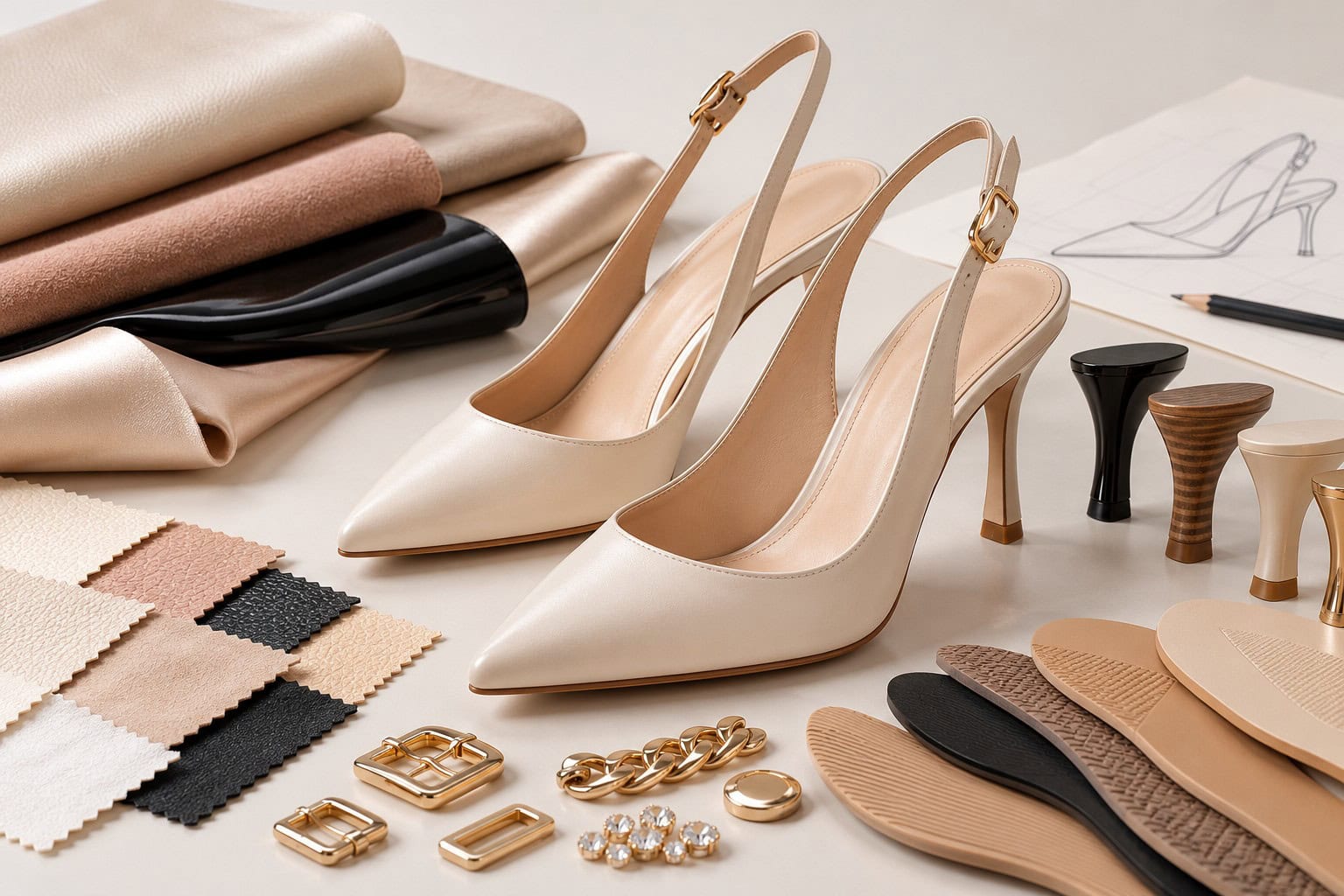
Existing Components Can Help Control Development Costs
Developing every component from scratch can become expensive, particularly for a new footwear brand.
Before opening new moulds, it is worth asking the factory whether suitable existing components are available.
These can include:
- lasts
- outsoles
- heels
- buckles
- ornaments
- welts
- insoles
A Custom Women Shoe Manufacturer can often review the original design and suggest which elements can use existing components without significantly changing the intended appearance.
Custom tooling can then be reserved for the elements that genuinely define the product.
This approach can reduce initial development investment while still allowing the brand to create distinctive footwear.
Fit Testing Matters More Across a Large Size Range
If a collection covers EU 35–46, relying on a single EU 37 or EU 38 sample may not provide enough information about the entire size range.
Brands should consider testing representative sizes.
For example:
Standard size sample: EU 38
Middle/upper size sample: EU 42 or 43
Extended size fit check: EU 45 or 46
The exact process depends on the construction.
The purpose is to identify potential grading, width or proportion issues before bulk production.
For brands serious about Extended Size Women Shoes, this extra development step can be worthwhile.
What Brands Should Ask an Extended Size Shoe Manufacturer
Before selecting an Extended Size Shoe Manufacturer, brands should ask more than “Can you make EU 46?”
Useful questions include:
- What is the actual available size range for the selected last?
- Does the outsole cover all required sizes?
- Are suitable heel moulds available for the extended sizes?
- Can a new last be developed if necessary?
- Can standard and extended sizes use the same visual design?
- Can extended sizes represent a smaller proportion of the order?
- Can wide width versions also be developed?
- Which sizes should be used for fit testing?
- Are additional mould costs required?
- What is the MOQ per style and color?
These questions help reveal whether a supplier genuinely understands large-size development or is simply agreeing to enlarge an existing pattern.
Extended Size Women Shoes as a Brand Opportunity in 2027
The opportunity is not simply “people have larger feet.”
The more interesting opportunity is the gap between size availability and fashion availability.
Consumers increasingly expect products that reflect their individual fit requirements without forcing them to compromise on style.
That creates space for brands offering:
Fashionable Large Size Shoes
Large Size Heels
Large Size Flats
Large Size Boots
Large Size Sandals
Plus Size Women Shoes
Wide Width Women Shoes
For a brand entering this market, the goal should not be to make extended-size footwear look like a specialist medical or comfort category unless that is the intended positioning.
The goal can simply be:
Make great fashion shoes — and make them available to more women.
Working With a Plus Size Shoe Manufacturer
HoldingStyle is a Women Shoe Manufacturer in China specializing in custom women’s footwear development, including standard sizes, Plus Size Women Shoes and Wide Width Women Shoes.
We work with footwear brands on different stages of product development, including:
- design development
- custom shoe lasts
- extended size development
- material selection
- outsole and heel sourcing
- sampling
- private label branding
- packaging
- bulk production
- quality control
For brands planning Extended Size Women Shoes, we can review the complete size range at the beginning of development and help determine whether existing lasts, outsoles and heels can be used or whether additional tooling is required.
This is particularly important for fashion footwear such as heels, pumps, Mary Janes, flats, sandals and boots where components can limit the available size range.
FAQ: Extended Size Women Shoes
What are Extended Size Women Shoes?
Extended Size Women Shoes generally refer to footwear offered beyond the standard size range commonly available in women’s fashion collections. Depending on the market and brand, this may include EU 43, EU 44, EU 45, EU 46 and above.
Are extended size shoes the same as wide width shoes?
No. Extended size usually refers primarily to shoe length and grading into larger sizes, while wide width footwear provides additional width and internal volume. Some consumers need both extended sizing and wide width.
Can fashionable heels be manufactured in EU 45 or EU 46?
Yes, but the manufacturer needs to confirm the availability of suitable lasts, heels and outsoles. Some designs may require additional moulds or custom components.
Can a brand order fewer pairs in the largest sizes?
In many production programs, different quantities can be allocated across the size breakdown. The exact requirements depend on the manufacturer, construction, materials and total order quantity.
Can an existing women’s shoe design be developed in extended sizes?
Often yes, but the design should be reviewed before simply scaling it up. Last shape, outsole size, heel stability, hardware and overall proportions may require adjustment.
What is the difference between a Plus Size Shoe Manufacturer and a regular shoe factory?
A manufacturer experienced with extended sizes should understand the additional requirements around lasts, outsole and heel size ranges, grading, fit testing, width and component availability.
Can brands develop private label extended size footwear?
Yes. Private Label Women Shoes can be developed with custom materials, colors, logos, packaging and extended sizing, depending on the construction and available components.
Developing Your Extended Size Collection
For brands looking toward 2027, extended sizing can be more than an additional checkbox on a size chart.
It can be an opportunity to serve consumers who want better choice, better fit and better fashion.
The strongest collections will combine thoughtful design with proper technical development — ensuring that an EU 45 shoe receives the same attention to proportion, comfort and appearance as an EU 38.
If your brand is planning Extended Size Women Shoes, Plus Size Women Shoes or Wide Width Women Shoes, HoldingStyle can help evaluate your designs, size range and component requirements before sampling.
HoldingStyle – Custom Women Shoe Manufacturer
WhatsApp: +86 186 6415 5853
Email: [email protected]
Website: https://holdingstyle.com/